Motomaxsfr


Search Product
Belt Drive Vs Chain Drive Efficiency Motorcycle
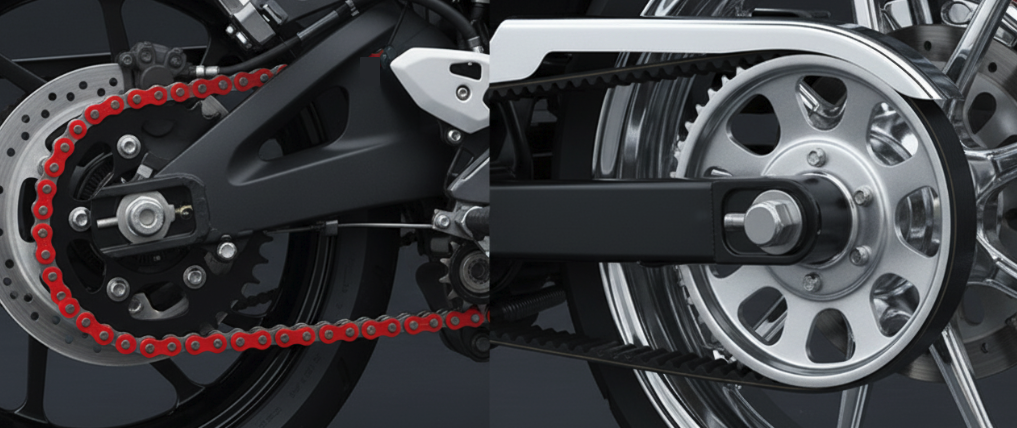
When it comes to choosing belt drive or chain drive, the winner at the efficiency level is actually very intuitive: the chain system is always better in performance. The chain usually accounts for only 1% to 3% of the power loss from the countershaft to the rear wheels, while the belt system often loses 9% to 15% of the power. For those friends who are dead on the wheel horsepower and throttle response speed, the chain is the “standard”. Its metal-to-metal structure largely avoids energy dissipation due to heat generation and stretching. Although the belt is really quiet and worry-free, and is deeply loved by cruise riders, its transmission efficiency is really not enough in the field of high-performance sports vehicles where every minute counts.If you are looking for extreme acceleration and mechanical efficiency, the combination of low moment of inertia and low friction loss of the chain is the undisputed first choice-provided that you are willing to take the effort to lubricate and clean it regularly to keep it in peak condition.
Physics Of Power Loss: 1% Vs. 15%
The chain is made of high tension steel segments to precisely engage the sprocket teeth. This metal interface is very rigid, which ensures that every watt of energy produced by the engine can be transmitted to the ground almost unreservedly. In contrast, belts rely on reinforced rubber composite materials. Under heavy loads, these belts “elastically deform”, that is, stretch. This stretching, coupled with the high tension that must be maintained in order to prevent tooth removal, generates significant internal friction and heat. In the logic of mechanical engineering, heat is “wasted energy”. This also explains why the belt consumes nearly 15% of the potential output of the engine before power is transmitted to the tires.
Maximization Of Horsepower On Wheels
Talking about the horsepower on the wheel, this is the ultimate indicator of the parameter rider. Because the chain drive minimizes energy dissipation, it allows your rear wheels to retain more of the original power from the engine crankshaft. I found that when you unscrew the throttle, the instantaneous, blade-like feedback of the chain drive cannot be given by the belt. This is due to the fact that the chain system has almost no sense of damping. The belt does absorb some of the engine’s vibration, which makes cruising riders feel more comfortable, but from a technical point of view, this “absorption” is essentially a sign of energy loss. For imitation or performance-oriented machines, the direct and uncompromising nature of the chain ensures that the torque transmission is instantaneous, giving you the pleasure of a direct dialogue with the engine power belt.
Moment Of Inertia And Acceleration Dynamics
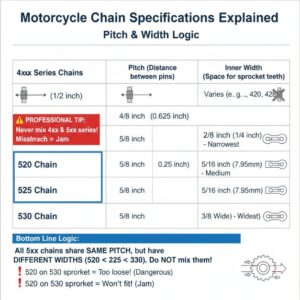
In the efficiency of the belt and chain, there is also a hard indicator that is often overlooked: the moment of inertia. Efficiency is not only about friction, but also about how much energy it takes to make an object move. Chain systems, especially the lightweight 520 or 525 series O-or X-seal chains, have a much smaller moment of inertia than the bulky wide pulleys and thick belts of the belt system. The lower moment of inertia means that the engine speed climbs faster and the rear wheels are faster. In those occasions where extreme acceleration is sought, the chain can start quickly and maintain very low losses, which is the optimal solution for any rider who cares about the thrust-to-weight ratio.
The Maintenance Tradeoff Behind Peak Efficiency
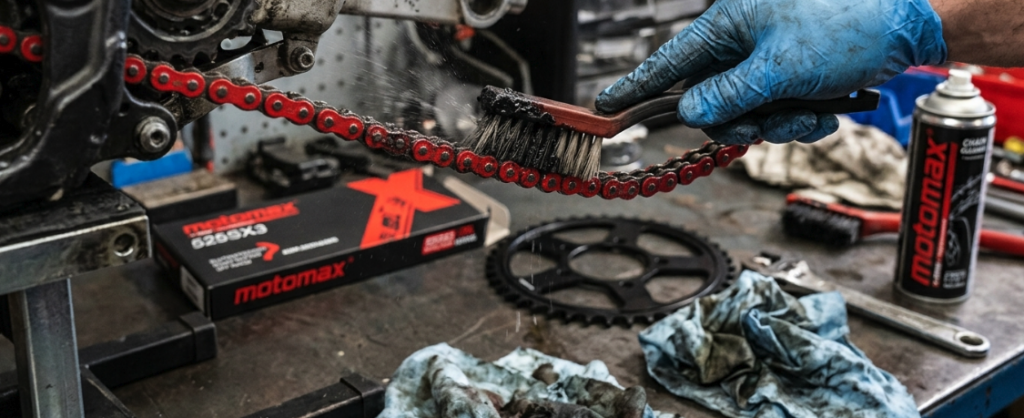
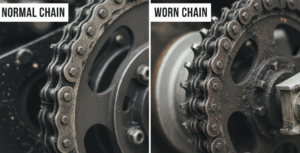
The “maintenance-free” label on the belt is tempting, but this saving comes at the cost of a permanent loss of efficiency. If you want to keep the chain 98-99% of the industry’s top efficiency, you really have to put in some energy. Reasonable lubrication can reduce the friction between rollers and sprocket teeth, and thorough cleaning can prevent road dust from becoming sandpaper-like wear resistance. Maintaining the chain in “peak operating condition” is essentially protecting your investment in the performance of this car. For players who regard motorcycles as precision instruments rather than simple means of transportation, the little trouble of washing the chain is in exchange for pure mechanical efficiency that the belt can never give.
Author: Alex Vance
Having spent countless hours on the dyno measuring drivetrain parasitic loss, I focus on translating complex physics into practical riding advice. My goal is to help enthusiasts maximize every bit of rear wheel horsepower through engineering-backed insights and real-world mechanical experience.”
Related recommendations
-

Why Motorcycle Chain Loose
38Dealing With A Loose Motorcycle Chain? Discover The Causes, How To Adjust It, And When It’S Time For A Full Replacement.
View details -
Motorcycle Chain Size Chart Decoded
323View The Motorcycle Chain Size Chart. A Mechanic Explains 520, 525, & 530 Pitch Vs Width So You Buy The Right Parts.
View details -
How To Take Off Motorcycle Chain
239Easily Take Off A Motorcycle Chain. Guide For Removing Master Link Clips With Pliers Or Breaking Rivet Style Chains With Tools.
View details -
What Is Sprocket Pitch
362Define Sprocket Pitch, Learn Why Matching Matters, And How To Measure Pin-To-Pin Distance For Any Drive System.
View details