Motomaxsfr


Search Product
Can You Over Lube A Motorcycle Chain
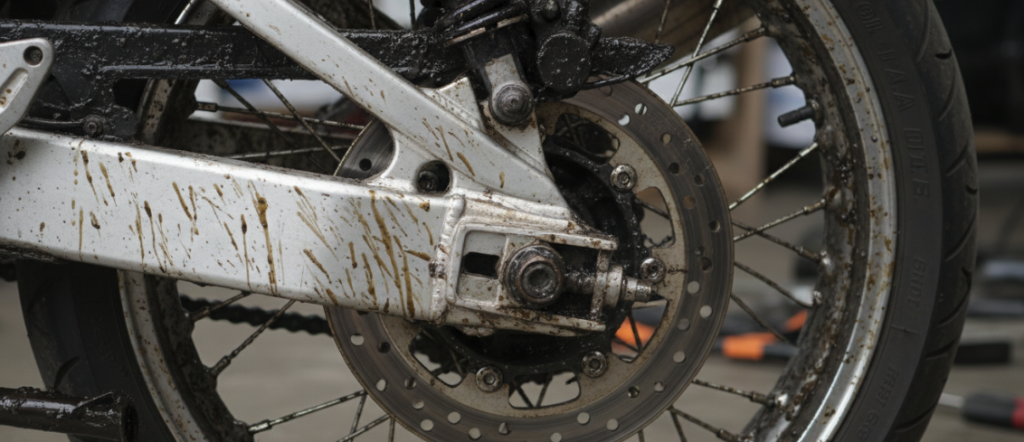
Directly to the conclusion: absolutely not. In fact, excessive lubrication is more harmful to the car than you think. Too many novices fall into the misunderstanding of “more fuel injection equals more protection. The most direct consequence of this approach is “fling-off. Excessive chain oil will rotate with the chain, swinging the rear rocker arm and wheel hub everywhere. This is actually a serious safety hazard-viscous oil can easily splash on the rear sidewall and even the brake disc. Once the brake system is contaminated, the braking efficiency will plummet instantly.
How Excess Oil Ruins The Chain
Many people may think that even if a little oil is thrown out, there will be more oil hanging on the chain, and the lubrication will definitely be more in place. On the contrary, excessive lubrication will accelerate the chain scrap. Today’s locomotive chains (especially O-type, X-type or Z-type seal chains) are precision components. When the chain is full of oil, it becomes a powerful “vacuum cleaner”, sucking all the gravel and metal debris on the road. When these impurities and oil are mixed, they 1 an extremely disgusting “grinding paste”. As the chain runs at high speed on the toothed disc, this layer of paste acts like liquid sandpaper, constantly wearing away the rubber rings used to seal the grease and eating the metal rollers and toothed discs. You think you are maintaining, but you are actually accelerating the wear and tear of your transmission system from the outside.
Internal Lubrication Vs. External Maintenance
To avoid excessive lubrication, we must first find out where the lubricating oil is sprayed. For modern sealing chains, the core grease is sealed behind the rubber seal as early as the factory. Our usual maintenance work is actually only two key points:
Moisturizing O-ring: to prevent the internal grease loss caused by dry and cracked seal ring.
Protective roller: a layer of film is formed on the surface of the roller to reduce the friction and heat when it engages with the gear plate.
Besides, any extra oil is a liability. If you see oil dripping down from the chain link, or beach oil accumulated in the chain guard, it is definitely too much spray.
How To Achieve The Just Right Lubrication State?
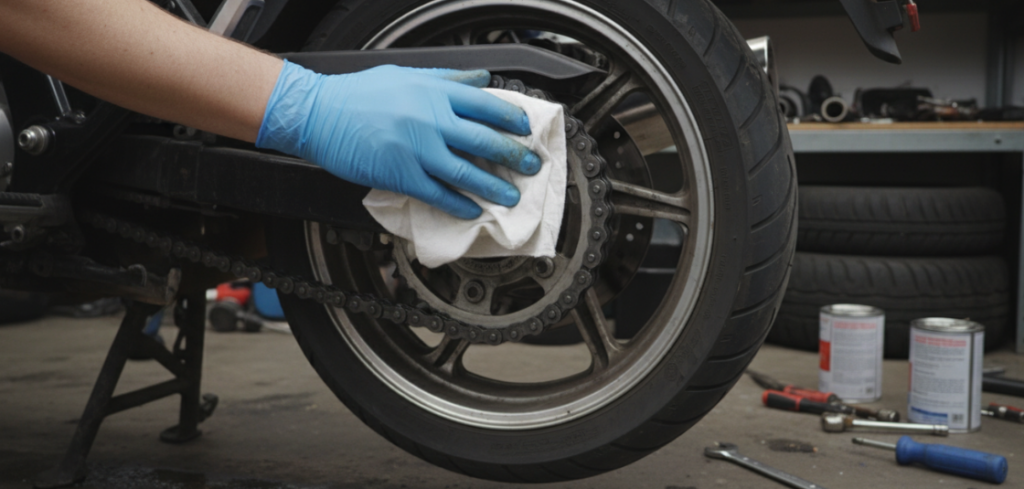
In order to make the chain in perfect condition and not “surplus”, I suggest referring to the following operating specifications:
Must be cleaned before lubrication: never spray new oil directly on the old sand and gravel sludge. First, use a special chain cleaner and brush to clean the layer of “abrasive paste.
Warm car fuel injection: just after riding back is the best time. The residual temperature of the chain allows the lubricant to penetrate into the small gaps more easily, while allowing the solvent to evaporate faster.
Accurate positioning: the nozzle is aligned with the inner side of the chain (close to the side of the gear plate), and the focus is on the sealing ring at the connection of the chain plate.
“Wipe” rule: Many people leave after spraying, but I strongly recommend that after spraying the lubricating oil and leaving it for a few minutes, take a clean cloth and gently wipe the outside of the chain. This step can take away the excess grease that is destined to be thrown away, and the parts that really need lubrication have left enough oil film.
Changing your thinking from “more is better” to “less precision” will not only make your car cleaner and safer to ride, but also save you a lot of money for replacing expensive chain gear sets.
Author: Alex Thorne
With years of hands-on experience in professional motorcycle repair shops, I’ve seen firsthand how ‘over-protection’ can actually destroy a bike. I have witnessed countless novices fall into the trap of over-lubrication, and I’m passionate about debunking these common maintenance myths.
The prev: How To Size A Motorcycle ChainThe next: What Happens If Your Motorcycle Chain Is Too Loose
Related recommendations
-

Motorcycle Chain Specifications: Size & Best Chain
392Master Motorcycle Chain Specs, Sizes, And Applications. Find The Best Chain For Your Bike With Our Expert Guide.
View details -
Can I Use Bicycle Chain Lube On A Motorcycle Chain
315The Short Answer Is No. Bicycle Lube Lacks Viscosity And Will “Fling Off” Immediately. Find Out Why It Risks Damaging Your O-Rings.
View details -
What Are Motorcycle Sprockets
377What Are Motorcycle Sprockets? Discover How These Components Transfer Power, Act As Torque Amplifiers, And Tune Your Bike’s Speed.
View details -
How To Get Rid Of Rust On Motorcycle Chain
301Learn How To Get Rid Of Rust On Motorcycle Chain Safely In 20 Mins. Restore Your Bike With This Easy Step-By-Step Guide.
View details