Motomaxsfr



Produkt suchen
How To Measure Sprocket Chain Size
To determine the exact chain specifications, it is not necessary to blindly search, only by vernier caliper or standard tape measure, accurate measurement of the 3 core dimensions: pitch, roller width and roller diameter.
As long as these data are accurate and compared with the manufacturer’s standard table, there will be no mistakes. For example, a pitch of 5/8 inch with an inner width of 1/4 inch is a common 520 motorcycle chain. However, if you measure the pitch of 1/2 inch, it is mostly 428 specification or industrial chain. Don’t skip the measurement steps in order to save trouble, because buying the wrong parts is not only troublesome, but also may lead to excessive wear of the chain due to mismatch, and even danger during operation.
Preparation Before Repair
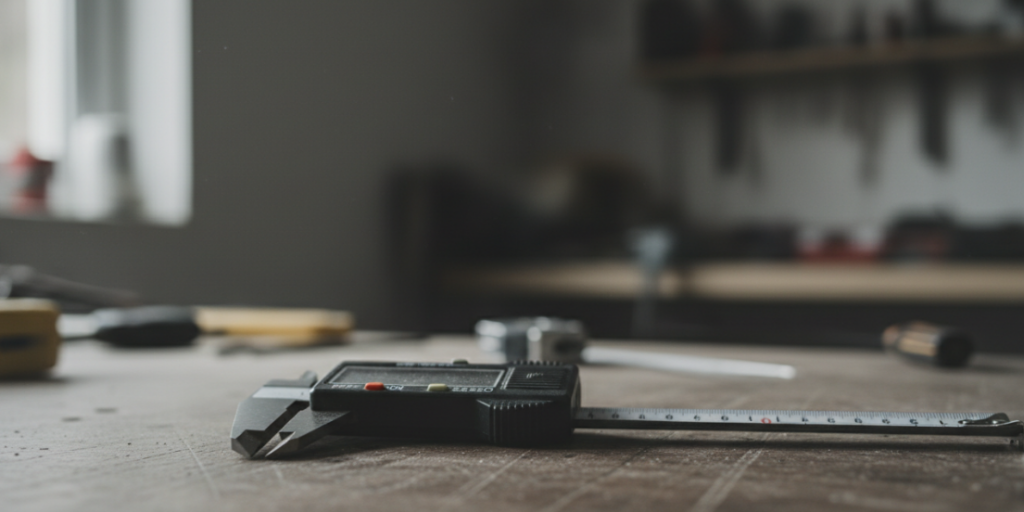
Determining the size of the chain does not require the kind of expensive top-of-the-line tools in the repair shop. To get those key data, you only need to prepare the following two:
- Digital Caliper: If your job requires precision, this stuff is essential. It provides extremely accurate readings, which is essential for identifying chain models.
- Standard tape measure: If you really don’t have a caliper on hand, a high-quality tape measure can make do with it. However, it should be noted that when using the tape measure, you must stare at the scale, because the size is slightly different, the model may not match, and you must not estimate it by “feeling.”
The Step Of Measuring The Size Of The Chain
To find an accurate replacement, you must perform a “physical examination” of the existing old chain and measure it in the following steps:
Step 1: Pitch Measurement
“Pitch” is the core parameter of the chain, which represents the distance between the chain links.
- How to measure on the chain: Use a vernier caliper or tape measure to measure the linear distance from the center of a link pin to the center of an adjacent pin.
- If the chain is lost or broken: you can directly measure the sprocket. Measure the distance from the center of one tooth to the center of the next tooth.
Step 2: Measure The Roller Width / Inside Width
This is the second key dimension, which determines whether the chain can smoothly bite on the sprocket teeth without getting stuck or shaking.
- Messverfahren: observe the inside of the chain and find the gap between the two inner chain plates. Measure the exact width of this inner void. Because the sprocket teeth are embedded in this position, this size is very important.
Step 3: Measure The Roller Diameter
Finally, the measuring roller itself-the cylindrical metal part that directly contacts the sprocket teeth.
- Messverfahren: use a caliper to clamp the cylindrical roller horizontally and measure its outer diameter. This dimension determines the depth at which the chain is inserted into the sprocket tooth groove.
Serie 520VX2 Kette
Fahrradszenarien: Straße, Autobahn, Motorradtouren, Stadtfahrten.
Standard Size Table
Once you get the numbers of pitch, roller inner width and roller diameter, the hard part is over. The rest of the job is to check the table and lock in your target model.
Here are a few common examples to help you understand data transformation:
- 520 Motorcycle Chain: If you measure a pitch of 5/8 inch and an inner width of 1/4 inch, then your chain is basically the 520 model, which is the most commonly used size on motorcycles and ATVs.
- 428 Chain And Industrial Chain: If the pitch measurement result is just 1/2 inch, then you are usually facing the 428 chain commonly used in small displacement motorcycles or industrial chain commonly used in heavy equipment.
Why Do I Put So Much Emphasis On Measurement Accuracy?
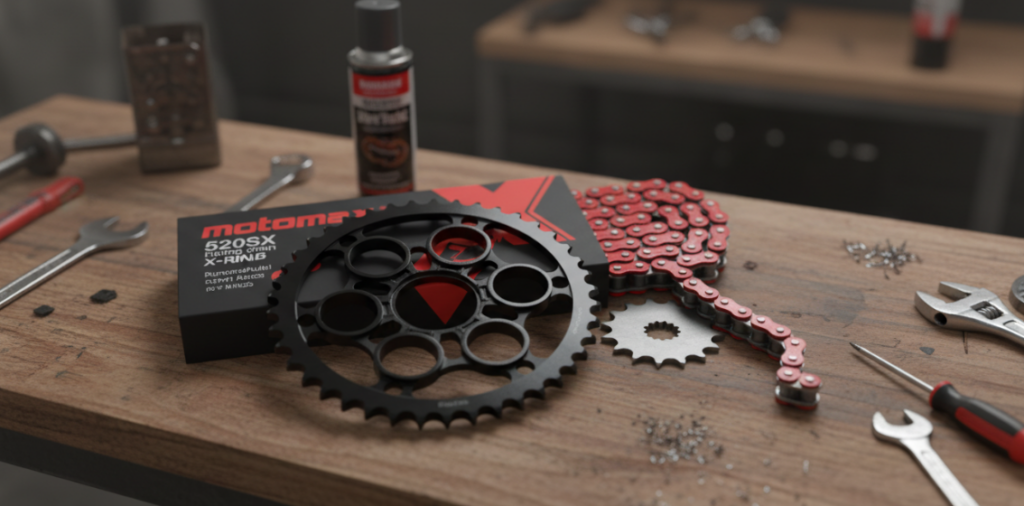
Learn how to measure the size of the chain, not only to match the parts, but also for the safety and efficiency of the equipment.
Accurate measurement of these key dimensions can bring two direct benefits:
- Prevent dangerous wear: If there is a slight deviation in pitch or inner width, the chain will not fit perfectly into the sprocket. This misalignment can cause the chain and sprocket teeth to wear quickly and prematurely, and even jump or break the chain during high-speed operation, with disastrous consequences.
- Save time and money: many customers buy parts by feeling because they are too troublesome, but when they buy them, they find that they can’t fit them and have to take them down and return them. Spending a few more minutes on accurate measurement can save you a lot of time and unnecessary return and exchange freight.
Author: Jame Mike
Hi, I’m a heavy machinery and motorcycle technician with over 13 years of hands-on experience in the workshop. I’ve spent countless hours troubleshooting drive systems, and I’ve learned the hard way that the difference between a smooth ride and a mechanical failure often comes down to a few millimeters. Through this guide, I want to share my professional insights to help you get the job done right the first time, ensuring your equipment stays reliable, safe, and cost-effective.
Die vorl: Motorrad-Bremssattel zusammendrückenDie nächste: How To Rebuild Brake Caliper Motorcycle
Verwandte Empfehlungen
-

Wie man erkennt, ob eine Motorradkette defekt ist
288Erfahren Sie, wie Sie erkennen können, ob eine Motorradkette defekt ist. Erkennen Sie Symptome wie Schleifgeräusche, schwergängige Glieder und hängende Kettenräder noch heute.
Details anzeigen -
Wann ist die Motorradkette zu ersetzen?
361Lernen Sie die wichtigsten Anzeichen für Motorradkettenverschleiß kennen, vom Zugtest bis zu hängenden Kettenrädern. Wissen Sie genau, wann Sie Ihre Kette austauschen müssen.
Details anzeigen -
Wie oft die Motorradkette reinigen und schmieren
359Wie oft sollte man die Motorradkette reinigen und schmieren? Ein Mechaniker erklärt die 300-600-Meilen-Regel und warum Regen alles verändert.
Details anzeigen -
Wie lange hält eine Motorradkette?
60Lernen Sie, wie Sie Motorradbremssättel selbst reinigen können. Folgen Sie unserer Expertenanleitung, um Sicherheit zu gewährleisten, Verschleiß zu verhindern und zu sparen.
Details anzeigen