Motomaxsfr


Search Product
How Long Does Motorcycle Chain Last
It is normal for a motorcycle chain to run 15000 to 30000 miles. But some novices who scrapped the chain in less than 5000 miles because they didn’t care about the maintenance at all.
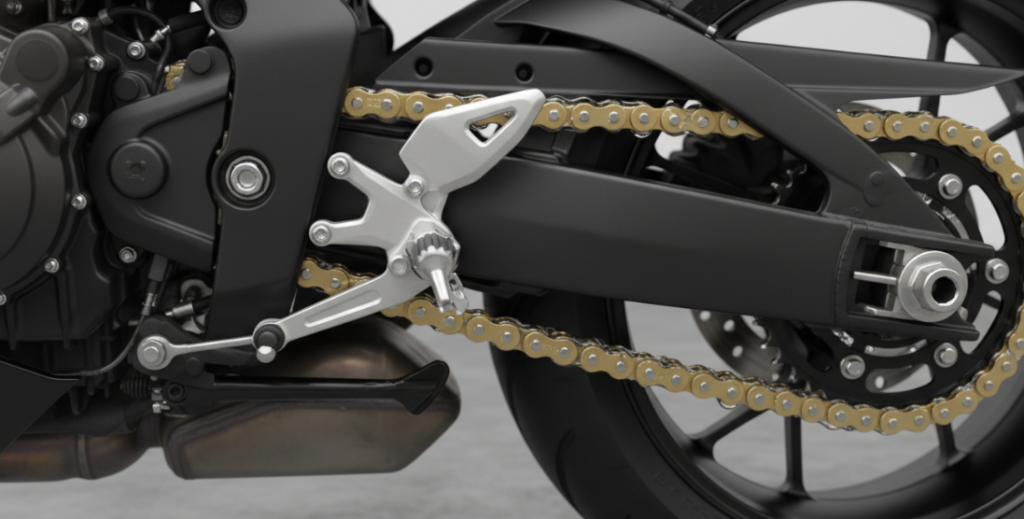
The life of the chain is not just a number on the odometer. Today’s motorcycles mostly use O-ringsor X-rings, which are sealed chains with grease inside, which determines that they are much more resistant to operation than old-fashioned chains. But it’s your driving habits and maintenance frequency that determine when it will eventually “die”. When you find that the chain is rusty, some knots are dead and can’t move, or the regulator has been pulled to the end, then the chain is asking for help. Don’t forget to look at the sprocket. If the sprocket becomes as sharp as a “hook”, the new chain will be useless.
Several Key Factors Affecting Chain Life
1. Driving style and riding environment
The strength of your right hand to twist the throttle directly determines the pressure of the chain. Aggressive acceleration, starting (wheelies) or frequent downshifting engine braking will bring huge tensile pressure to the chain link. The environment is also a “silent killer”. If you often ride by the sea (with heavy salt), run on dirt roads, or get wet in the rain, debris and corrosion will penetrate the sealing ring, wear the internal parts, and greatly reduce the mileage.
2. Sealed chain vs non-sealed chain
Most cars now come standard with sealed chains. A rubber gasket is added between the inner and outer plates to seal the lubricating grease from the factory in the roller.
- O-ring: The most standard configuration, the protection effect is already very good.
- X-Ring: Usually found on high-performance cars. Their contact surface is smaller, the “four lips” design friction is lower, and the oil locking effect is better than the O-ring.
If you know what kind of car you use, you can know how much “internal strength” your chain has to resist external erosion.
When Is It Time To Change The Chain?
Don’t wait for the chain to break on the main road to regret it. Pay more attention to these 3 signals during maintenance at ordinary times:
- Obvious rust and corrosion: a little floating rust on the surface can be cleaned up, but if there is a serious pothole, the strength of the metal will be greatly reduced.
- KINKED Links: If you find that when the chain passes through the sprocket, some places still keep the “V” shape bent and not straight, then the internal lubrication is completely scrapped. These dead joints can cause vibrations and, in severe cases, even catastrophic fractures.
- Excessive stretching: As the pins and bushings wear, the chain will become “long”. If you have adjusted the rear axle to the farthest scale of the rocker arm, and the chain still has a sag of more than one inch , then it is completely hopeless.
Chain And Sprocket
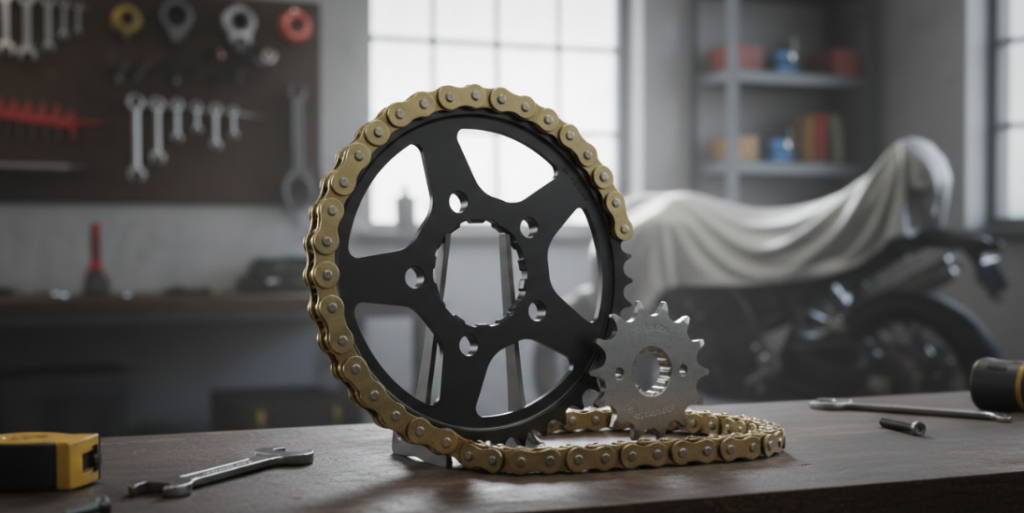
Many novices only replace the worn chain in order to save money, but keep the old sprocket.
Check whether your sprocket is “hooked”:
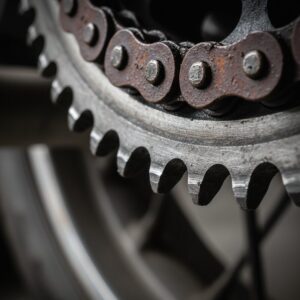
Normal sprockets should be symmetrical and have a flat top. If the tips of the teeth appear to be curved or pointed like shark fins, the metal is badly worn. At this time, if you change into an expensive new chain, the teeth of the old sprocket will frantically “bite” the connecting rod of the new chain, resulting in the life of the new chain shrinking by half.
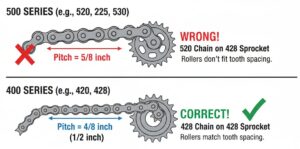
My golden rule: the chain and the sprocket must be replaced in complete sets. This ensures a perfect fit between the chain pitch and the teeth of the chainset, which not only makes the power output smoother, but also safer.
Summary
Keep an eye on your mileage, choose the right type of chain, and pay more attention to the wear of the sprocket, and your car will run safely and efficiently. Remember, taking care of the chain is not just to save that little bit of money for a change, but to keep you safe every miles you ride. On the road, no one wants to lose the chain because of this hardware failure.
Author: Ryan Davidson
“Hi, I’m a long-time motorcycle enthusiast and grease monkey, I’ve spent more hours in the garage and on the open road than I can count. Over the years, I’ve seen everything from pristine 30,000-mile chains to disastrous failures caused by simple neglect. I believe that proper maintenance isn’t just about saving money; it’s about ensuring that every mile you ride is as safe as the first.”
Related recommendations
-

What Is Sprocket Pitch
359Define Sprocket Pitch, Learn Why Matching Matters, And How To Measure Pin-To-Pin Distance For Any Drive System.
View details -
How To Measure Motorcycle Chain Slack
383Learn How To Measure Motorcycle Chain Slack In Minutes. Ensure Your Bike Runs Safely And Performs Perfectly.
View details -
How long does a motorcycle chain last
561Learn how long a motorcycle chain lasts, factors that affect its lifespan, and tips to maintain it for safe riding.
View details -
How To Adjust Brake Calipers Motorcycle
39Master Motorcycle Brake Caliper Maintenance. Follow This Guide To Clean, Lubricate, And Bleed Your Brakes Safely.
View details