 Motomaxsfr


Search Product
How Often To Lube Motorcycle Chain?
Author:Kenny Roberts Sr.
Kenny Roberts Sr. is an American former professional motorcycle racer and a three-time 500cc Grand Prix World Champion (1978–1980). Widely regarded as one of the sport’s most influential figures, he revolutionized riding style with his pioneering use of cornering techniques and aggressive racecraft. Beyond his racing success, Roberts played a pivotal role in improving rider safety and later founded his own racing team, shaping generations of MotoGP talent.

Why Is It So Important To Lube Motorcycle Chain?
the role of lubricant:
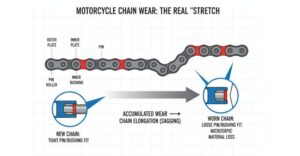
Reduce friction and extend chain life. When the chain is running at high speed, the friction between the chain links and the toothed disc is huge. The lubricant forms a protective film on the metal surface, which greatly reduces this direct metal contact, thereby reducing wear. Make the chain more smooth to use, can also be used for longer.
Reduce noise and improve riding comfort. Dry chains can make annoying noises, especially at idling or low speeds, which can drive people crazy. After lubrication, these noises will be significantly reduced, making your riding experience quieter and more pleasant.
Prevent corrosion and keep the chain in good condition. Especially in wet and rainy areas or on the road with salt in winter, the chain is very easy to rust. Lubricant can effectively isolate moisture and air, just like wearing a 1 waterproof and rust-proof “raincoat” for the chain, maintaining its good mechanical properties.
Improve power transmission efficiency and ensure driving safety. A well-lubricated chain can more effectively transmit the power of the engine to the rear wheels, reducing energy loss. Conversely, a jerky, worn chain may cause poor power transmission, and even in extreme cases, affect your handling and safety.
Neglecting the hazards of lubrication:

- Premature chain wear and elongation.
- The abnormal sound of the chain affects the mood.
- More serious consequences: the chain breaks, and even cause accidents.
- High replacement costs.
The Real “Determinant” Of Chain Lubrication Frequency”
Mileage: an important but not unique indicator
Mileage is only a reference and cannot be generalized. For example, if you run 500 kilometers of high speed and I run 500 kilometers in mud, can the chain wear be the same? Obviously different.
Environmental factors
Road conditions with a lot of dust and sand: Sand is like a small abrasive, which will accelerate the wear of the chain, so the lubrication frequency must be greatly increased.
Rain, wet weather: After the rain, the lubricating oil on the surface of the chain is basically washed away, and the water vapor adheres to the surface of the chain, which can easily lead to corrosion. At this time, timely cleaning and lubrication is necessary.
High humidity, salt coastal areas: salt spray in coastal air is extremely corrosive, which is a fatal blow to metal parts. If you ride in these places, the lubrication frequency must be increased, and special attention should be paid to the choice of chain oil with strong corrosion resistance.
Riding style
Your riding style has a decisive influence on the “life” of the chain and the lubrication cycle.

Intense driving: For motorcycle friends who like “violent” driving, the chain bears greater impact and stretching, and the wear is naturally faster. Therefore, more frequent lubrication cannot run away.
Smooth cruise: Relatively speaking, if you prefer a smooth cruise, the chain is evenly stressed, the wear is slow, and the lubrication period can be appropriately extended.
Chain Type and Lubricant Selection: The Embodiment of Expertise
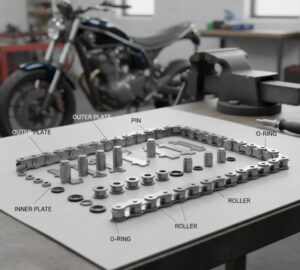
- O-ring/X-ring chain: This kind of chain has a sealing ring inside. The main function of lubricating oil is to protect the rollers and side plates to prevent external wear and corrosion. The internal pin and sleeve are protected by factory grease.
- Non-sealed chain: This chain does not have any sealing structure, and all wear is relieved by external lubricating oil. Therefore, non-sealing chains require more frequent and thorough lubrication.
- The choice of lubricants: this is very important! I have seen many novices try to save trouble and lubricate the chain with oil or even butter. This is absolutely wrong! Professional motorcycle chain oil has unique adhesion, dust resistance and penetration. It can be firmly attached to the surface of the chain, not easy to throw off, effectively block dust, but also can penetrate into the gap between the roller and the sleeve. Ordinary engine oil is too thin, easy to throw off, dustproof effect is poor; Butter is too sticky, easy to absorb dust and form abrasive.
Standard Operating Procedure For Chain Lubrication
It is recommended to check the condition of the chain every 300-500 kilometers, and then decide whether lubrication is required according to the actual situation. This is just a basic guide. If you have just experienced a 1 rainstorm ride, or rode a long distance on a dusty non-paved road, or even just feel that the chain is running a little astringent, or hear a little abnormal noise, then don’t hesitate, Lubricate immediately.
Because different riding environments, riding styles, and even the brand of chain and lubricant you use will affect the cleanliness and lubrication retention time of the chain. Fixed frequency maintenance sounds very worry-free, but it often can not meet the real needs of the chain.
Correct steps for lubrication:

Clean: This is the first and most critical step.
- Cleaner selection: It is recommended to use special chain cleaners, which usually dissolve oil efficiently and are harmless to O-rings or X-rings. Never use gasoline or diesel.
- Cleaning tools: A chain brush and several clean rags are essential.
- Cleaning method: use chain brush with cleaning agent, carefully scrub every link of the chain, especially the connection between the roller and the chain plate. Focus on removing sediment, old oil and anything dirty on the chain. This is a need for patience and meticulous link.
Drying: After cleaning, make sure that the chain is completely dry. You can wipe it with a clean rag or let it dry naturally for a while. Spray lubricating oil on the wet chain, the effect will be greatly reduced.
Lubrication:
Lift the rear wheel: Find a suitable parking frame to lift the rear wheel so that it is convenient to turn the chain.
Evenly spray: start the engine, put in first gear, and let the rear wheels rotate at a constant speed. Align the nozzle of the chain lubricating oil with the inner side of the chain, that is, the junction of the roller and the chain plate, instead of spraying directly on the outer surface of the chain. Lubricating oil needs to penetrate between the roller and the sleeve to really work.
Wait: After spraying lubricating oil, let the chain stand for 10-15 minutes. This allows sufficient time for the lubricant to fully penetrate the various gaps in the chain. I usually take this time to get a glass of water or check the tire pressure.
Wipe: In the last step, use a clean cloth to gently wipe off the excess lubricating oil on the surface of the chain. This can effectively reduce the phenomenon of oil throwing during riding and keep the body clean.
Related recommendations
-

Motorcycle Brake Caliper Maintenance Guide
447Learn how to maintain motorcycle brake calipers with cleaning, inspection, and care tips to ensure safe and reliable braking.
View details -
How often should i lube my motorcycle chain
444Learn how long a motorcycle chain lasts, factors that affect its lifespan, and tips to maintain it for safe riding.
View details -
Motorcycle Chain Size Chart: The Complete Guide
509Explore The Complete Motorcycle Chain Size Chart, Learn How To Choose The Right Chain, And Ensure Durability And Fit.
View details -
Why Does Motorcycle Chain Get Loose
200Discover Why Your Chain Gets Loose. It’s Not “Stretch,” But Wear From Friction. Learn How Lubrication And Alignment Affect It.
View details