Motomaxsfr


Search Product
How To Compress Motorcycle Brake Caliper
First of all, the caliper must be removed from the fixed bracket and the old piece must be removed. The safest operation is to unscrew the oil pot cover of the master cylinder first, then use the brake cleaning agent to thoroughly brush the exposed piston wall, and finally take a C- clamp or piston pump tool to press slowly and steadily against an old brake pad. The old gasket is used to cushion the force evenly, so that the piston will not be tilted when it returns, and the delicate sealing rings will not be crushed. This process can not only release the hydraulic reverse pressure, make room for the thicker new film, but also prevent dirt from being pushed directly into the brake system.
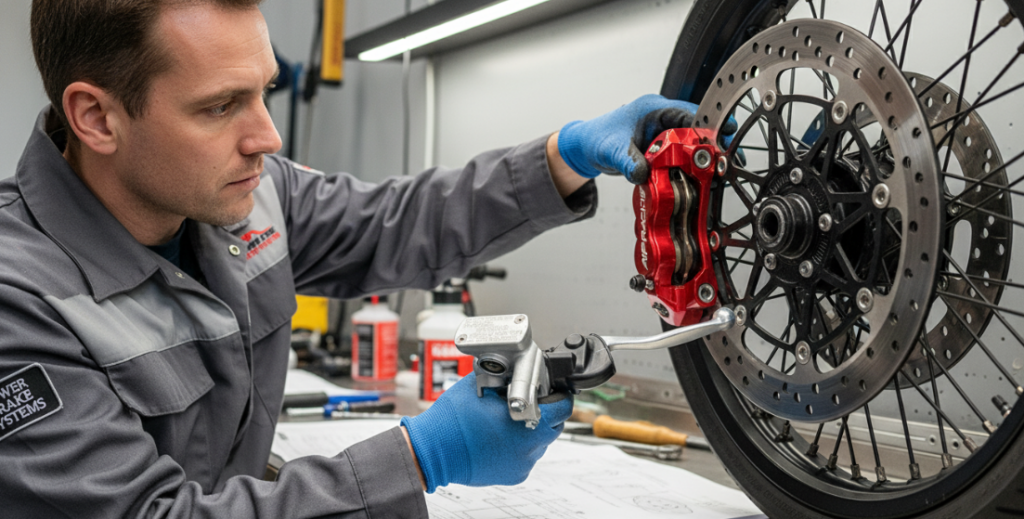
Dismantling The Calipers And Preparatory Work
Before you start pressing the piston, you have to make room for yourself. Take a socket wrench to unscrew the fixing bolt on the caliper, and carefully slide out the old piece after the caliper is separated from the brake disc. At this time, the inside of the caliper is empty, which is convenient for you to observe the piston state. Here is a detail: find an elastic rope or cable tie to hang the caliper, don’t let it hang on the rubber brake hose, the pipe can’t stand such ordeal, in case the internal structure is damaged, you have to spend more money behind.
Dealing With Hydraulic Reverse Pressure
When you push the piston back, you are actually pushing the brake fluid back through the oil pipe and directly back to the master cylinder. In order to operate the energy-saving point and to prevent the piston from “rebounding”, you have to go to the handlebar or frame to find the brake master cylinder oil can. Carefully unscrew the lid.
Always wrap a clean repair rag around the oil can. The new piece is much thicker than the old one. The liquid level will definitely rise when you press the piston. The brake oil is extremely corrosive.
Clean The Piston Wall
The piston has been exposed for a long time, full of brake dust and dirt on the road. I found that many people directly hard press for the sake of speed. These sand particles will directly destroy the sealing ring. Get some high-quality brake cleaner and take a soft brush to brush the side wall of the piston. A clean piston can only slip smoothly when it returns to its position, which can prevent inexplicable oil leakage or stuck in the future from the root.
The Use Of “Old Film Method” Uniform Pressure
In order to ensure that the piston is retracted vertically, put an old brake pad back into the caliper, close to the piston. This old piece is a perfect force transmission bridge at this time. Support the C- clip or expansion tool in the center of the old piece.
This is done with care: through the old piece, the force of the C- clamp can be evenly distributed on all piston surfaces at the same time. The piston is easy to press the crooked, once the top, the inside of the O-ring is basically useless.
Press To The Bottom And Make Room
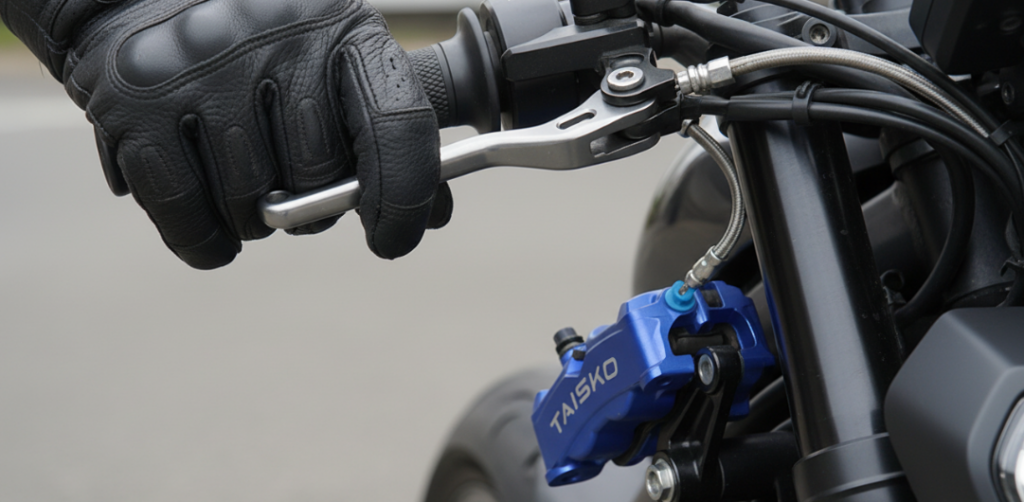
When tightening the C- clamp, the force should be steady and the movement should be slow. You can feel the obvious resistance of the hydraulic system, but as long as you continue to apply pressure, the piston will slowly retract until it is flush with the caliper housing. At this time, there is enough space. After stuffing a thicker new piece, the caliper can easily slide back onto the brake disc.
Finally, many words: after all installed, remember to tighten the oil pot cover, and repeatedly pinch the brake handle or step on the foot brake until the feel is restored. This is to push the piston back onto the new film, otherwise you will never brake on your first foot when riding out, which will cause great problems.
Author: Jaxson Miller
I’ve performed hundreds of brake services and seen firsthand how a single skipped step—like pushing a dirty piston back into its bore—can ruin a caliper. I write these guides to share the practical, ‘in-the-trenches’ mechanical wisdom I’ve gathered over the years, helping fellow riders maintain their machines safely without the dealership price tag.
The prev: How To Paint Motorcycle Calipers
Related recommendations
-

What Happens If Your Motorcycle Chain Is Too Loose
64A Loose Chain Can Scrap Your Engine. Learn To Spot Chain Slap, Prevent Sprocket Damage, And Ride Safely Today.
View details -
When To Change Chain Motorcycle
64When To Change Your Motorcycle Chain? Expert Tips On Identifying Wear, Rust, And Stretch To Stay Safe On The Road.
View details -
Should I Change My Sprockets With My Chain
192Yes, You Should Replace Sprockets With Your Chain. Learn Why Synchronization Is Vital For Safety And Performance.
View details -
Motorcycle Chain Size Chart Decoded
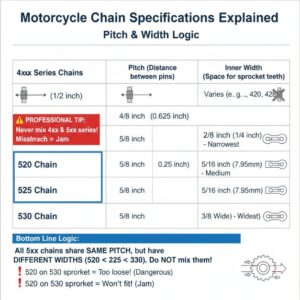
357View The Motorcycle Chain Size Chart. A Mechanic Explains 520, 525, & 530 Pitch Vs Width So You Buy The Right Parts.
View details