 Motomaxsfr


Search Product
How To Lube Motorcycle Chain
If you want to make motorcycle chain maintenance in place, the most effective way is actually a set of standard 4-step process. This set of movements must be done every 500 miles (about 800 kilometers) or after returning from a rain ride. This is the absolute principle to prevent rust and extend the life of components.
First of all, you must ride for 10 minutes first. This allows the chain to heat up, and after the metal chain links expand, the lubricating oil can really seep into the depths of the O-ring or X-ring. Then, be sure to turn off the engine and put it in neutral. If there is a frame or a large ladder, lift the frame. If not, it is OK to use side braces, that is, you have to push the cart manually with some effort.
In the cleaning process, first pad the cardboard on the ground to protect the floor, and then use special chain cleaning agent or kerosene to brush off the old grease with the three-sided chain brush. After the chain is completely dry, while turning the rear wheel by hand, spray the chain wax or lubricating oil directly on the inner roller and oil seal. Finally, if you don’t want to throw all the oil on your bike next time, the secret is to wipe the excess oil on both sides of the chain with a workshop rag and dry it for 15 to 30 minutes before hitting the road.
When To Carry Out Chain Maintenance
The core of motorcycle maintenance is “persistence.”
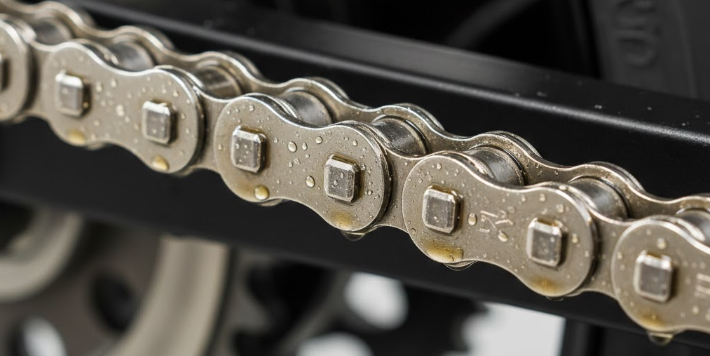
The 500 miles is the golden rule for most street cars. But the number of kilometers is not the only frame of reference. The impact of environmental factors on the health of the chain is actually greater. If you have just ridden a car in the rain, you should know that rainwater is not only water, it is also the carrier of road sand and gravel, but also a natural solvent, which will directly wash away your protective oil film and cause corrosion.
In this case, regardless of how many kilometers you ran, even if you only ran 10 kilometers, you must clean and oil immediately when you come back. Regular maintenance is not only to prevent rust, but also to prevent the chain link “dead,” to ensure the smooth power transmission.
Step 1: Warm Up The Chain
You have to get the car ready before you reach for the cleaning agent. I find that many novices skip this step—take a 10-minute ride first. Why is hot chain so important?
- Thermal expansion and contraction: The heat generated by friction will cause small expansion of the metal chain links.
- Better permeability: When you spray lubricating oil, the residual temperature of the chain can help the oil to become thinner, so that it is easier to penetrate between the chain plates and the tight gaps in the O-ring or X-ring.
Safety Warning: After the chain is hot, park the car. Confirm that the engine must be off and the gearbox in neutral. Never, never try to clean or oil when the car is in gear.
Step 2: Correct Vehicle Placement
To work, the rear wheels have to be able to turn.
- Large ladder or lifting frame: If your car has its own large ladder, or if you have a lifting frame, it is perfect. The rear wheel is suspended in the air, and you can easily turn the wheel with your hands.
- Side support method: If there is no support, stop diagonally against the side support. You need to clean/oil the currently exposed section of chain, and then manually push the car forward a bit to expose the next section. Although troublesome, the effect is the same.
Tip: Before starting the dirty work, pad the floor under the chain with cardboard or old newspapers. Trust me, you don’t want to spend an afternoon cleaning up grease stains on the garage floor or driveway.
Step 3: Deep Cleaning
This is also a misunderstanding: many people think that direct spray new oil on the line. In fact, spraying new oil on the dirty chain, mixed with sand, becomes a kind of strong “grinding paste,” which will accelerate the chain wear.
- Spray cleaning agent: Use special chain cleaning agent or kerosene. These solvents are safe for delicate rubber O-rings that seal internal grease. Remember to avoid using gasoline or strong carburetor/brake cleaner; those things are too strong and will bubble the rubber seal.
- Brushing: Brush hard with a chain brush (the kind of three-sided brush designed for chains). The bristles can stir up old sludge and road dirt stuck to the chain links.
- Drying: After brushing, make sure the chain is dry. Lubricants do not hang on wet or solvent-laden surfaces.
Step 4: Oil
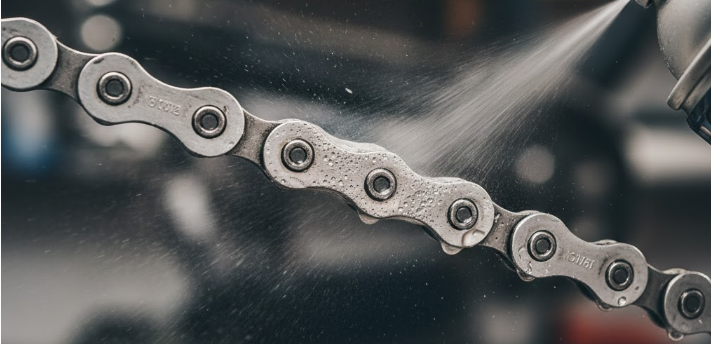
The chain is now clean and dry, and it is best to carry a little residual temperature. At this time, new oil can be added.
- Target area: Align the nozzle with the inner roller and the O-ring/X-ring. This is where metal-to-metal contact and rubber seals need to be moistened.
- Technique: Slowly turn the wheel (or cart) by hand while spraying to ensure that the entire chain is evenly covered.
Step 5: Reject The Finishing Touches Of “Oil Dumping”
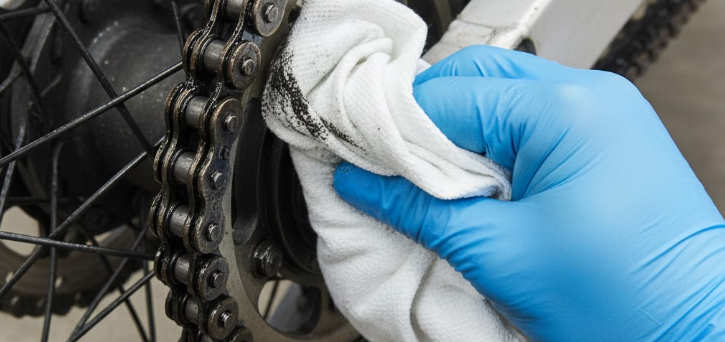
This last step can often tell whether you are a novice or an old bird. Many riders complain that the rear wheel hub, tire edge, and even trouser legs are full of oil spots after riding laps after maintenance. This is purely because there is too much oil left on the outside of the chain.
- Wipe off excess grease: Take a rag and wipe the side plate of the chain thoroughly. The side plate does not need to be lubricated, and the oil left on it will only absorb dust.
- Ride time: Let the car rest quietly for 15 to 30 minutes before riding. This is to allow the carrier solvent in the lubricant to evaporate, leaving only the thick, protective wax film or grease.
According to this process, it can not only prevent rust and wear to the greatest extent, but also save you a lot of money for replacing the chain tooth plate in the long run.
Author: Mark Harrison
I believe consistent maintenance is the key to safe riding. In my experience, the secret to extending your bike’s life isn’t just buying expensive parts—it’s following the right process. That’s why I advocate for the ‘warm chain’ method every 500 miles. Whether you use a paddock stand or just a kickstand, I’m here to help you keep your hands clean and your chain rust-free—always with the engine strictly turned off.