 Motomaxsfr


Search Product
Motorcycle Chain Rust Solution
How to Safely Remove Chain Rust
Required Tools
Technician warning: Never use wire brushes on modern motorcycle chains. Now the chain is basically O-Ring or X-Ring oil seal chain. The hardness of the steel wire is too high, the rubber oil seal will be scraped by the brush, the grease sealed in the original factory will leak, and the chain will die.
What you really need is:
- Cleaning agent: Kerosene (Kerosene) is the eternal god (Gold Standard). It can dissolve rust and sludge, and the key is 100% safety for rubber oil seals. Of course, Motul or IPONE, a special chain cleaner, will do.
- Pit-Avoidance Guide: Don’t use gasoline. Gasoline will swell the rubber and destroy the chain faster than anyone else.
- Brush: a dedicated three-sided nylon chain brush, or an obsolete old toothbrush.
- Lubricant: High quality chain wax or chain oil.
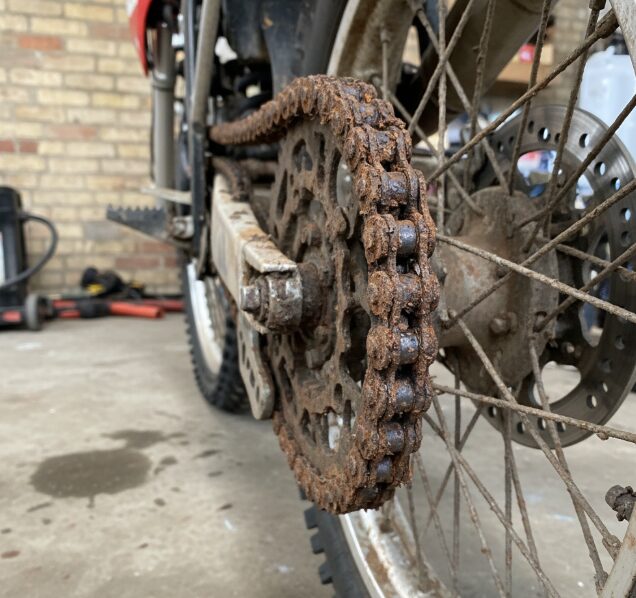
Refurbishment and repair steps
- Soak and soften: put the frame on a large ladder or lift the frame. Spray enough kerosene on the rusty chain and don’t save it. Air for 3 to 5 minutes and let it penetrate the surface rust.
- Three-sided brushing: pick up your nylon brush and brush the top, bottom and sides of the chain times. You will see the orange mud dripping down. In case of stubborn rust spots, spray kerosene and brush until the silver or gray metallic color is revealed.
- The most critical step-thoroughly blow-dry: wipe the chain completely clean with a workshop rag. If you have an air compressor or leaf blower in your hand, blow against it and blow the solvent out of the gap.
- Experience: I ‘ve seen too many people grease their chains when they are still wet, and as a result, they all throw away the oil when riding out. The chain must be dry, remember.
- Correct oiling: The chain oil should be sprayed on the roller on the inner side of the chain (that is, the side in contact with the tooth plate), and don’t spray it on the outer side chain plate foolishly. After spraying, let stand for 15 minutes before riding.
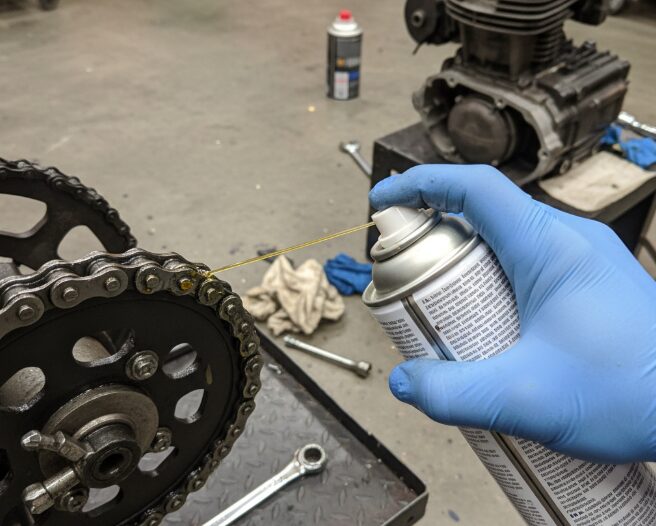
Final conclusions on WD-40
Ordinary blue bottle WD-40 can be used for rust removal and cleaning, it will not corrode the O-ring, which is no problem. However, it is not a lubricant. After washing with it, it must be wiped clean, and then serious motorcycle chain oil must be added again. Just spray WD-40 and hit the road? Then your chain will soon be dry ground and scrapped.
When to Replace a Rusty Chain
If any of the following three situations occur, don’t hesitate to replace the chain and tooth plate.
Sign 1: Death Festival (Kinks)
Turn the rear wheel and stare at the chain passing through the rear crankset. Is the chain as smooth as a wave, or are there a few links that fold and “freeze” there and can’t stretch straight?
Diagnosis: This means that the rust has eaten into the pin turning point. The pin shaft is stuck in the bushing and cannot be washed well. This “dead joint” chain runs with great vibration and may break at any time under high load. A broken chain can crack your engine case or lock the rear wheels directly-this is no joke. Change it directly.
Sign 2: “Red Dust”
Take a closer look at the rubber oil seal between the chain links. Do you see kind of thin, brick red powder? Note that this is not the same as the bright orange floating rust on the outside.
Diagnosis: This is called “red powder disease” in the circle “. The powder came from inside the chain. This means that the O-ring has failed, the grease sealed in the original factory has run out, and what you see is the iron powder that has been dry ground between the pin and the bushing. This chain is “brain dead”, replace it.
Sign 3: Excessive elongation with fangs
Rusty chain is often a lack of maintenance of the chain. Check your chain adjuster.
Diagnosis: If the rear axle has been adjusted to the back, the chain is still loose, indicating that the elongation has exceeded the service limit. By the way, take a look at the teeth of the dental tray-if the tips of the teeth become as sharp as “shark fins” or appear barbed, the rusty chain has gnawed away the dental tray. At this time, the chain tooth plate should be replaced in complete sets.
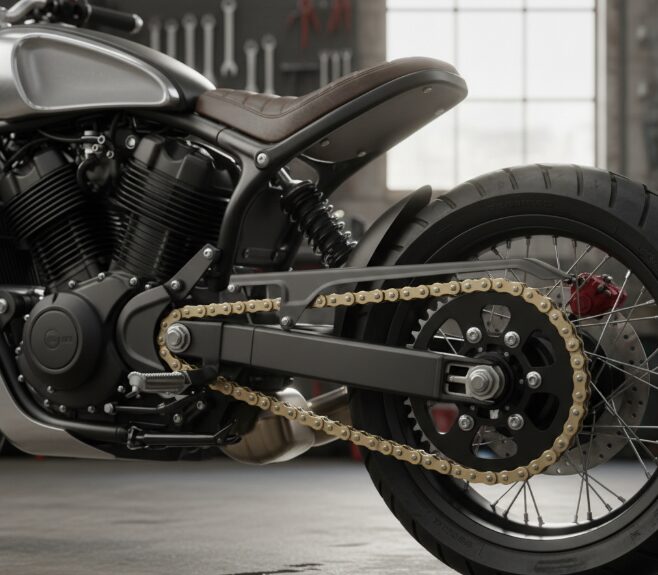
Preventing Motorcycle Chain Rust
- Melting salt/sea breeze: If you ride a bike in the winter or live near the sea, salt can corrode metals surprisingly fast. After running this road, remember to flush the chain with cold water.
- The misconception of “stop after washing”: never park your car all night just after washing it. Water stops on the chain and can oxidize a layer of rust night. After washing the car, be sure to ride out for a lap, use centrifugal force to dry the water, and heat up the chain by the way. At this time, the oiling effect is the best.
- Storage environment: If you can only park outside, the early morning dew is the culprit of rust. Buying a simple car cover can greatly reduce the accumulation of moisture in the transmission system.
About the Author: Mark Reynolds
I’m Mark Reynolds, a certified Lead Motorcycle Technician with over 15 years of experience running my own repair shop. Specializing in diagnostics and preventative maintenance, I’ve restored thousands of bikes—from neglected “garage finds” to road-ready machines. I write these guides to bridge the gap between dry professional service manuals and real-world DIY riding, because I believe safe riding starts with truly understanding your machine. When I’m not turning wrenches in the shop, you can usually find me adventure riding on my high-mileage dual-sport.