Motomaxsfr



Поиск продукта
How To Determine Chain Size From Sprocket
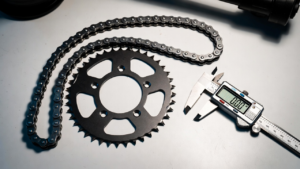
In order to quickly lock the chain size, the most reliable way is to take out a digital caliper and knock the 3 core parameters on the sprocket: pitch, tooth thickness and roller seat.
First, measure the center distance between two adjacent teeth, which is the pitch. Then, measure the tooth thickness, which directly corresponds to the inner width of the chain. Finally, observe the groove between the teeth and measure the roller diameter. Just take this 3 number to check the ANSI or ISO standard comparison table, even if there is no model number engraved on the sprocket, you can accurately determine whether it is 40, 50 or 10B series. The center distance is usually 1/2 inch, which is basically 40 series. 5/8 inch corresponds to 50 series; 3/4 inch is 60 series-of course, the premise is that the tooth thickness conforms to the industry standard tolerance, don’t measure it wrongly.
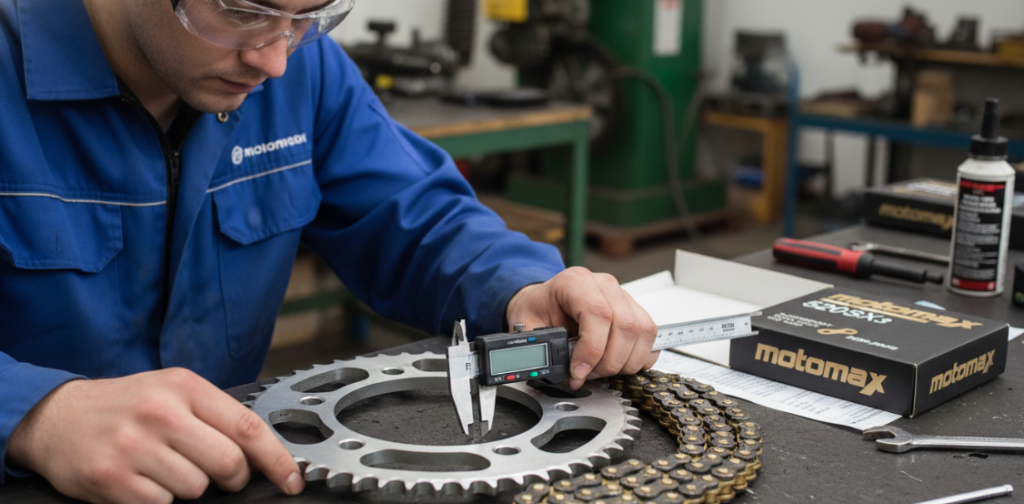
Measure The Pitch
Pitch is the top priority for identifying chain models. It is the distance between the center points of two adjacent gear teeth.
How to measure: Hold the center of one tooth with the tip of the caliper and pull it to the center of the next tooth.
Technician experience: If the sprocket is still hanging on the machine, the center point may not be easy to find. Directly measure the leading edge of one tooth to the corresponding leading edge of the next tooth. These two values are exactly the same, and the caliper is better positioned.
Why it matters: This number directly determines the chain number in the ANSI standard. For example, if you measure 0.500 inches, it must be in the #40 family.
Цепная серия
Тормозные суппорты и звездочки обеспечивают отличную производительность.
Цепь серии 520VX2
Сценарии велопрогулок: улицы, шоссе, городские поездки на мотоцикле.
Measuring The Tooth Thickness
The tooth thickness of the sprocket determines whether the chain can be successfully set up, which corresponds to the spacing between the chain plates in the chain.
How to measure: Put the caliper against the flat part of the side of the gear tooth. Note that it is important to measure the thickest part of the tooth before it begins to taper.
Decision logic: Take the standard 40 sprocket, the tooth thickness is usually about 0.284 inches. If the number you measure is much thinner than the standard value of the corresponding pitch, then you may have encountered a special specification or narrow series, and the chain suffix is different at this time.
Confirm The Roller Seat
The so-called “roller seat” is the arc-shaped “valley” between the two gear teeth. In order to ensure that the chain does not jump teeth and wear, the rollers must stay in this seat.
How to measure: Switch to the inner diameter claw of the caliper and measure the diameter of the arc groove between the teeth.
The Fourth Step: Look-Up Table Comparison Standard
After the data is available, the last step is to look through the standard table I just mentioned.
ANSI: If your pitch is increased by 1/8 inch, then it is basically American Standard.
ISO/English Standard: If the measured number does not match the English score, but just meets the metric value, then you have to check the 10B or 12B series table.
Author: Mike Sullivan
I’ve handled countless industrial drive system failures and custom machinery repairs. I specialize in translating complex mechanical standards into practical, on-site solutions to help fellow technicians and DIYers minimize downtime and get their equipment running perfectly.
Предыдущий: How To Rebuild Brake Caliper Motorcycle
Похожие рекомендации
-

Как проверить износ цепи мотоцикла
296Проверьте износ цепи мотоцикла с помощью простого теста на вытягивание. Если вы обнаружили половину зубьев на задней звездочке, замените ее.
Посмотреть детали -
Как почистить цепь мотоцикла
226Узнайте, как безопасно очистить цепь мотоцикла, чтобы продлить ее срок службы. Пошаговое руководство по обезжириванию и смазке.
Посмотреть детали -
Как измерить размер звездочки
260Научитесь точно измерять размеры звездочек. Определите шаг, диаметр отверстия и Bcd для идеальной и долговечной посадки.
Посмотреть детали -
Как очистить тормозные суппорты мотоцикла
101Узнайте, как самостоятельно очистить тормозные суппорты мотоцикла. Следуйте нашему экспертному руководству, чтобы обеспечить безопасность, предотвратить затягивание и сэкономить.
Посмотреть детали