Motomaxsfr


Search Product
Should A Motorcycle Chain Make A Noise
Should A Motorcycle Chain Make A Noise
Yes, during normal riding, the chain will indeed make a slight, continuous rustling or whistling sound. This is perfectly normal. The chain rollers mesh with the metal teeth of the chainring, and metal rubbing against metal is bound to make some noise. However, if you hear a loud metallic clanging, the sound of the swingarm being violently lashed by a snapping chain, or a piercing screeching friction noise, then something is definitely wrong. You can rest assured if you usually hear a faint buzzing sound. However, if the noise is irregular, extremely loud, or a sharp metallic screech, it usually indicates a mechanical problem. For example, the chain might be improperly tensioned (too loose or too tight), lacking lubrication and running dry, with worn-out crankset teeth that have developed hooks, or with certain stiff links in the chain jammed. Don’t panic-most of it is routine maintenance that you can handle in your own garage.
What Is The “Normal” Chain Sound?
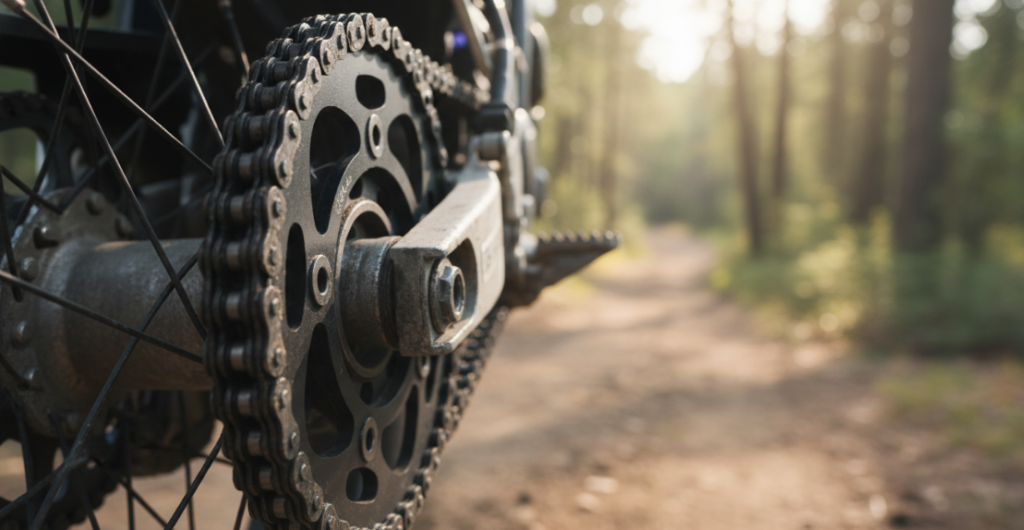
There is no absolutely silent motorcycle chain in this world. As long as your drivetrain is running (all moving parts, after all), you have to accept that slight, uniform whistling or rustling sound. This soft hum is actually an expression of the health of the transmission system, it is the acoustic feedback generated by the standard metal bite. When you ride at high speed, the metal rollers on the chain constantly engage and separate from the metal teeth on the tooth plate. As long as the sound sounds smooth, stable, and even fully integrated into the background sound of your riding environment, your chain state is perfect.
Abnormal Noise That Must Not Be Ignored
Although a slight rustle is no problem, some movements are obvious danger signals. Experienced riders are very sensitive to the sound of the car’s condition. If the sound of the transmission system becomes intermittent, noisy, or even with a strong metallic texture, you have to stop and check immediately. In particular, pay attention to the following three abnormal sounds:
- Heavy Slapping: Is a very loud, rhythmic, dull crash that feels like slamming the back fork of your motorcycle. It’s usually most noticeable when you’re slowing down.
- Huge metal knocking sound: Irregular and heavy metal collision sound, which feels like it “clangs” randomly every turns of the wheel.
- Sharp rubbing sound: Is a harsh and continuous metal scratching sound, which makes people feel poor, as if two pieces of iron are being ground hard.
Common Causes Of Chain Rattle
If you really hear those irregular or unusually harsh sounds above, it is mostly the following four specific mechanical failures at work.
1. Chain tension is not correct (too loose or too tight)
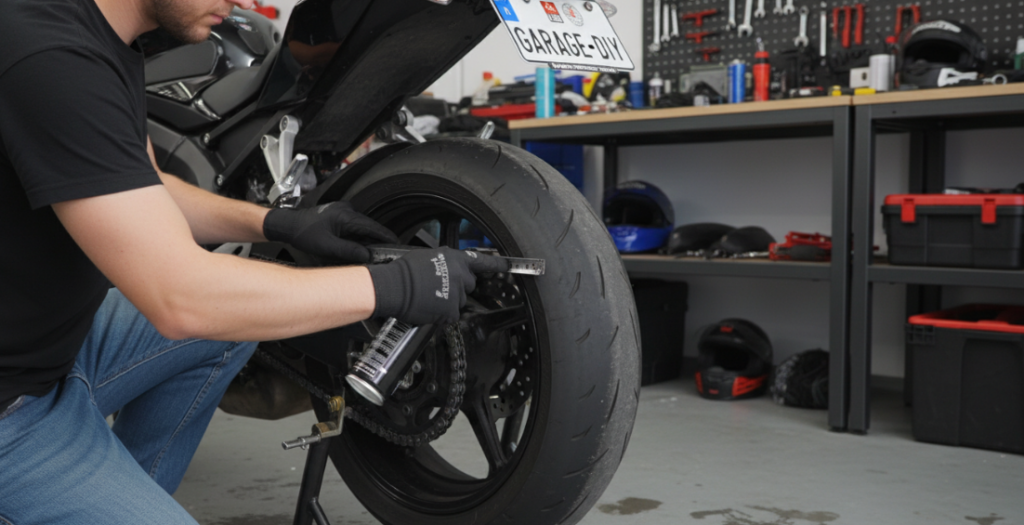
The chain can be quiet only when the tension is adjusted correctly. If the chain is too loose, it will deviate from the normal running track, causing it to slap its back fork crazily and make that dull slapping sound. On the other hand, if the adjustment is too tight, the roller and the tooth plate will be greatly pulled, and the metal will bite to death, which will force out the sharp, high-frequency howling or friction sound.
2. Chain dry lack of oil
The outside of the chain is the need for a layer of chain oil or wax to do the protective film to reduce friction. Without this layer of lubrication, the dry-ground chain will definitely make a harsh squeal or friction sound. Without the lubrication buffer, the standard metal contact directly becomes a destructive hard grinding, and the sound of the roller hitting the tooth plate will be amplified several times.
3. The tooth disc is worn and hooked
Over time, the metal teeth on the tooth plate will be worn out, and even the tips of the teeth will begin to curl, forming a “barb” shape. Once hooked, it is not crisp when releasing the chain roller. The chain will get stuck for a moment and then snap back into place, which is the kind of loud, irregular metal knocking you hear when you ride a bike.
4. Chain Dead Kinks
Sometimes, the individual links of the chain are not flexible when they turn, and they are stuck to death, which is what we often call “dead joints”. If you think about it, a stiff and inflexible chain will have to be pulled around the round tooth plate, and it will definitely make a crisp sound or a rhythmic “pop” sound. Every time this dead joint turns after the transmission system, the abnormal noise will be repeated.
Simple Maintenance That Can Be Done By Yourself
In the vast majority of cases, these sounds are not properly maintained. You can spend some time in your garage to check and solve the problem.
- For the tension is not correct: take a ruler to measure the tightness, adjust the alignment bolts on the rear axle, and adjust to the perfect tension according to the recommended scale in your car manual.
- For dry chains: find a free time, brush the chain cleaner one times, and then spray a layer of high-quality chain lubricating oil again. Believe me, the harsh sound of dry grinding disappeared immediately.
- For dead knots and Caton: A deep cleaning of the chain, manually rub the lubricating oil into the stiff O-rings or X-rings, usually can dissolve the dead knots and restore the chain to smoothness.
- For dental disc wear: if you look down and find that the dental disc teeth have been hooked, buy a brand new chain and dental disc set online directly. Prepare some basic hand tools and change them at home.
When riding a bike, keep your ears smart, pay more attention to those irregular metal noises, and solve them through the basic maintenance in the garage. In this way, your motorcycle chain will soon return to that normal, melodious “rustling” sound.
Author: Alex Carter
After spending over a decade riding and wrenching on motorcycles, I’ve learned that listening to your bike is the best diagnostic tool you have. Whether it’s doing routine maintenance or fixing a pesky mechanical issue, I spend most of my free time in my own garage getting my hands dirty. I’m passionate about sharing my practical, hands-on experience to help fellow riders stop panicking, save money at the repair shop, and hit the road with total confidence.
The prev: How Often Oil Motorcycle ChainThe next: How To Size A Motorcycle Chain
Related recommendations
-

Does A Smaller Sprocket Increase Speed
213Does A Smaller Sprocket Increase Speed? Learn How Front Vs. Rear Gearing Affects Your Top Speed And Acceleration.
View details -
How To Remove Front Brake Caliper On Motorcycle
18Learn How To Safely Remove Motorcycle Brake Calipers With Our Expert DIY Guide. Avoid Common Pits And Ensure Safety.
View details -
Motorcycle Chain Dimensions interpretation and measurement
342Full Motorcycle Chain Dimensions Chart. Decode 520 Vs 530 Sizes, Understand Pitch & Width, And Learn How To Measure Your Chain Correctly.
View details -
What Size Sprocket Is Best For Top Speed
51Master Motorcycle Sprocket Tuning For Top Speed. Learn The Golden Rule And Balance Power Vs. Drag.
View details