 Motomaxsfr


Search Product
Type Of Motorcycle Chain Explanation
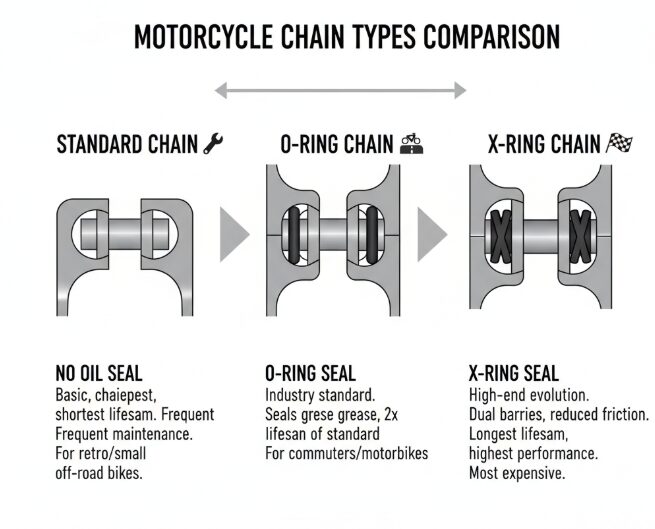
In the final analysis, the motorcycle chains on the market are mainly divided into three categories: non-oil seal chain (standard type), O-Ring(O-type oil seal) chain and X-Ring(X-type oil seal) chain.
To put it simply:
- No oil seal (standard) chain: the most basic and cheapest. There is no internal lubrication seal ring, which not only requires frequent maintenance, but also has the shortest life span. Generally only old-fashioned retro cars or small-displacement off-road vehicles are used.
- O-Ring chain: modern motorcycle industry standard. The “O” ring made of rubber seals the factory grease inside, and its service life is 1 times longer than that of the standard chain. Commuters and motorbikes must be right to use it.
- X-Ring chain: O-Ring high-end evolutionary version. The seal is shaped like an “X”, which creates two barriers and reduces friction (what we call “drag”). Although it is the most expensive, it has the longest life and the highest performance.
Below we will take these three kinds of chain apart for details.
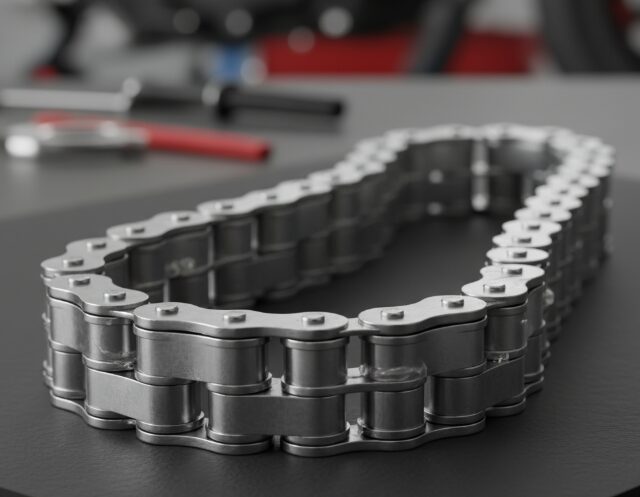
The 3 Main Types of Motorcycle Chains
1. The Standard “Unsealed” Chain
This is the old technology we used in the 1970s. To put it bluntly, it is metal grinding metal, and there is no rubber seal between the inner chain plate and the outer chain plate.
Applicable people:
To be honest, I only recommend two types of people to buy this kind of chain:
- Vintage retro car owners (because modern oil seal chains are usually wider and will wear to the engine box when installed on old cars);
- small Displacement cross-country car owners, the chain has to be changed after running a few races anyway, so there is no need to use it well.
Advantages:
cheap. And because there is no resistance of the rubber ring, the friction is very low when it is just installed.
Disadvantages:
It is a maintenance nightmare. Because there is no seal, dirty things can get in and lubricating oil can get out. Basically every 300 miles (about 480 kilometers) you have to clean and oil, otherwise the chain will soon stretch, and then you will destroy your dental tray.
2. The O-Ring Chain
Later, the manufacturer inserted a small rubber ring like a donut (“O” type) between the chain plates, which completely changed the maintenance logic of the motorcycle.
Applicable crowd:
70% knights. Whether you are riding a street bike, cruise or rally car, if you want to find a “don’t worry about it” balance between price and durability, buy O-Ring.
Working principle:
The O-ring locks the special factory vacuum injection grease between the pin and the roller, and also blocks the mud and water from the outside.
Technician’s point of view:
The life of the O-Ring chain of the car handled in my shop is usually 2 to 3 times that of the chain without oil seal.
3. The X-Ring Chain
This is the current top standard. Big factories like DID, RK or EK have adjusted the shape of the rubber ring and changed the originally round donut section to an “X” shape.
Applicable crowd:
track day players, high-performance imitation racing owners, and long-distance hardcore motorcycle riders. If you want to squeeze every horsepower out of the engine, or pursue the ultimate long life, go straight to the X-Ring.
Why there is this thing:
there is a problem with the old O-Ring chain: the rubber ring is squeezed between the metal plates, which will produce a “drag feeling” (friction), which will eat up a little horsepower. X-Ring reduces the contact area, while reducing friction, the sealing lip from one to two.
Technician view:
Stuff is good stuff, but if you’re riding a 250cc commute, using this is a bit of a performance overload (Overkill). However, if you want to save worry and have the longest service life (double seal lock oil is better), it is actually cost-effective to spread the extra money to 20,000 miles.
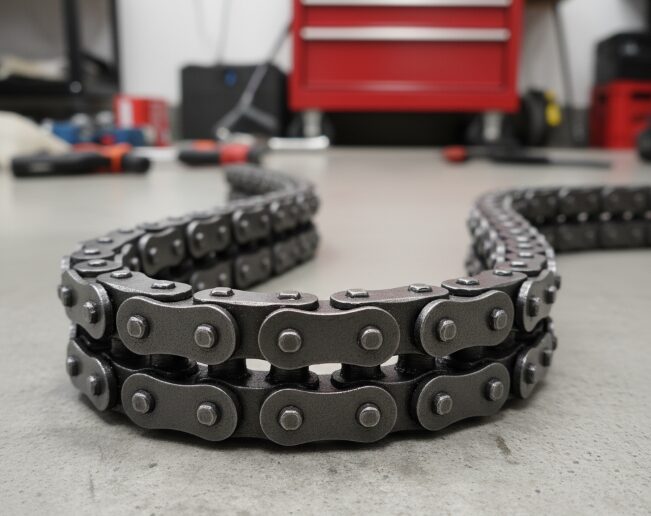
Which motorcycle chain Should You Buy?
In order to facilitate everyone to make a decision, I sorted out the comparison table drawn for the old customers at the front desk at ordinary times:
| Characteristics | Standard (no oil seal) | O-Ring (O-type oil seal) | X-Ring (X-type oil seal) |
| High maintenance frequency | (every 300 miles) | Medium (every 500-600 miles) | Low (every 600 miles or more) |
| Service life | short | long | very long |
| No horsepower loss | (low friction) | medium (sealing ring resistance) | low (smaller than O-Ring resistance) |
| Best Use | Old Car/Small Off-road | Street/Commuter (Cost-effective Choice) | Track/High-end Motorcycle Tour |
About the Author: Mechanic James
I’m James, a veteran motorcycle technician with over 20 years of grease under my fingernails. As the owner of my own independent shop, Mark’s Moto Garage, I’ve rebuilt thousands of machines—from vintage cruisers to modern superbikes. I write these guides because I’m tired of seeing riders waste money on marketing hype or risk their safety with the wrong parts. My goal is simple: to give you the same honest, mechanic-tested advice I give to the customers standing at my front desk.