
 Motomaxsfr


Search Product
What Happens If You Don’t Lube Your Motorcycle Chain
The most direct consequence is the increase in friction and high temperature, which will quickly dry and cause the rubber oil seal (O-rings) to crack. Once these sealing rings fail, the grease encapsulated inside the pin will be lost when leaving the factory, followed by rapid metal-to-metal wear, premature “elongation”, and those “dead knots” that can’t be straightened. (Frozen links).
In the short term, you will obviously feel the loss of power, jerky throttle response, and you can hear the harsh sound of metal friction. But in the long run, a dry chain is like a saw blade, which will cut your tooth plate crazily, and it is easy to break or take off the chain under high load. Once the chain locks the rear wheel, the consequences are unimaginable. To put it bluntly, neglecting lubrication is turning a $20 maintenance job into a repair bill of more than $200 for replacing a full set of chain teeth.
Friction And O-Ring Damage
When you skip the lubrication step, the first reaction on the physical level is intense friction and heat accumulation. The running speed of the motorcycle chain is extremely high. If there is no thin layer of lubricating oil film to separate the metal parts, the speed of temperature rise is very amazing. This high temperature is a disaster for modern oil seal chains (whether O, X or Z rings). These rubber seals are designed to lock the pin and the inside of the roller with the originally encapsulated grease. However, the excessive heat generated by the dry chain will “bake” these rubber rings dry, making them brittle and cracking.
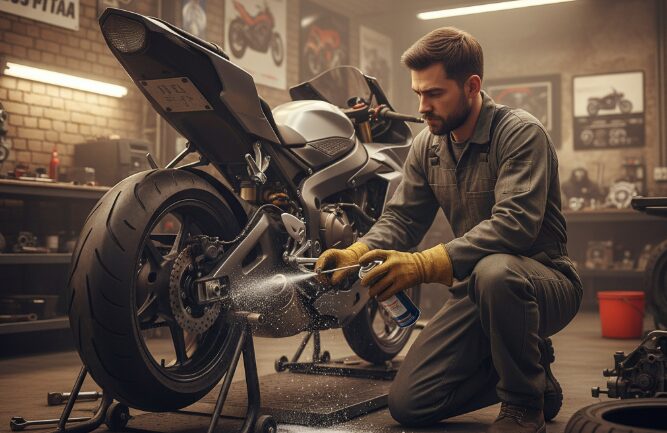
Once the integrity of the oil seal is destroyed, two things happen:
The gravel and dirt from the road surface drove straight into the chain.
Critical internal grease is lost.
Without internal lubrication, the chain begins the most primitive “metal grinding metal”. This wear eats up the pins and rollers, causing the amount of open space between the links to become larger. Although we are used to call this phenomenon “chain stretch” (chain), but from the perspective of the technician to correct: the metal is not stretched, it is only worn, resulting in the chain in the physical size of the longer. To make matters worse, without the grease, the chain links will jam, forming so-called “dead links” or kinks, which cannot be straightened at all when they pass through the mouthpiece.
Power Loss And Noise
Before a catastrophic failure occurs, a dry chain will actually call you for help through the “foot feeling” and sound of the car.
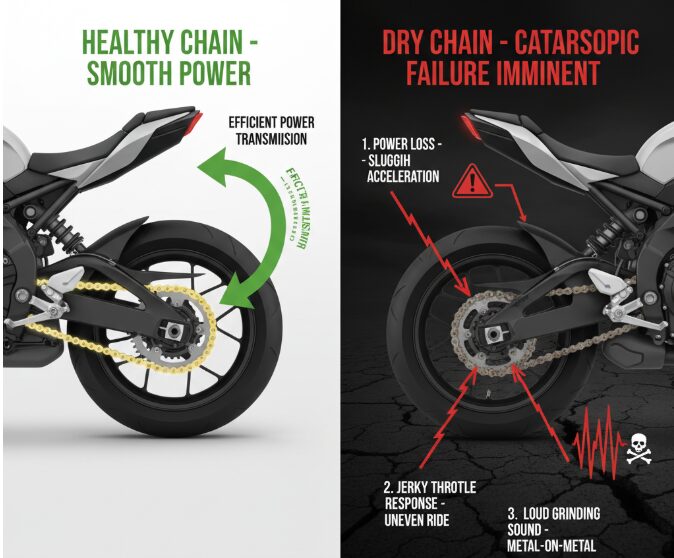
Obvious power loss: A well-lubricated chain efficiently transmits power from the engine to the rear wheels. And a dry, stiff chain creates tremendous resistance. The engine has to do more work to overcome this friction, and you will obviously feel that the performance of the vehicle decreases and the acceleration becomes less “rush.”
Throttle response: Because the chain may have “dead joints” or uneven wear, the power transmission will become discontinuous. When you give or receive oil at low speed, you may feel that the car has a sense of “rushing” or frustration, and the ride is not smooth.
The harsh grinding sound: This is the most obvious auditory signal. The sound of a dry metal roller hitting the teeth of a metal dental disc will produce a harsh grinding sound or scream, and the faster the speed, the louder the sound. My rule of thumb is that if you can hear your chain rattle over the engine or exhaust, it must be causing substantial damage.
The Saw Blade Effect And Safety Hazards
If the above warnings are ignored, the situation becomes very dangerous. A dry, unlubricated chain actually becomes a “saw blade” against your tooth plate. The hardened metal on the chain rollers will constantly grind the teeth of the front and back discs, grinding them into sharp hooks (our jargon is called “shark fins”). At this stage, the security risk is extremely high:
Fracture under high load: As the metal is thinned, and the heat weakens the tensile strength of the chain, the risk of chain breakage is extremely high. This usually occurs under high load conditions, such as when you are about to accelerate into a highway.
Off chain and rear wheel lock: A loose chain full of dead knots can easily jump out of the tooth plate. If the chain falls off, it is likely to accumulate between the cone and the rocker arm. This will instantly cause the rear wheels to lock up during driving, causing unavoidable sideslip or crash.
There are also situations I have seen many: the broken chain is thrown forward, directly blasting the engine case (engine case), and the engine is basically useless.
Maintenance Vs. Repair
Ignoring lubrication, while saving a routine cleaning job, locks in a much larger overhead in the future.
Maintenance costs: 1 bottle of high-quality chain oil plus a cleaning brush usually costs about $20 and can be used many times.
Maintenance Bill: Once a chain is ruined by lack of lubrication, it destroys the sprockets alongside it. You generally cannot put a new chain on worn sprockets. You will face a $200+ repair bill for a complete kit (new chain, front sprocket, rear sprocket) plus the labor costs if you don’t install it yourself.
Author:Adam
“I am a passionate motorcyclist and DIY mechanic with over a decade of riding experience. After learning the hard way how quickly a dry chain destroys sprockets, I now focus on sharing practical maintenance tips to help fellow riders save money and stay safe on the road.”