Motomaxsfr


Search Product
When To Change Chain Motorcycle
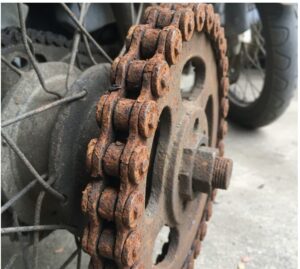
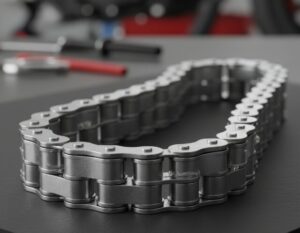
The transmission chain is the only part that transmits power from the engine to the ground, ignoring its maintenance is purely a joke on safety. If you find that the chain has “dead joints” (chain links that cannot be straightened), rust and corrosion are serious and damage the O-ring seal, or the chain has reached the “stretch limit” (adjusted to the bottom or loose), then don’t hesitate to replace it quickly. There is also a very intuitive danger signal: look at your dental plate. if the tip of the tooth has been hooked up like a “shark fin”, or if you can easily pull the chain apart at the end of the big dental plate and expose more than half of the tooth position, the chain will be completely useless. Under normal circumstances, a properly maintained O-or X-seal ring chain can last 15000 to 20000 miles, but as long as you hear the continuous grinding of iron, strange vibration on your feet, listen to me and replace it immediately.
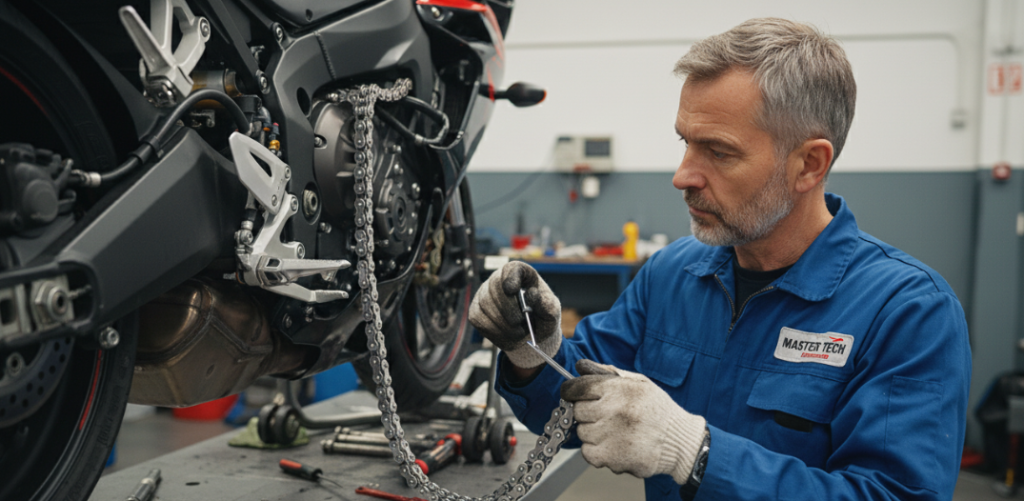
“Dead” Or “Stiff” Links
Whenever I mention dead links or chain links are stiff, the lubrication inside the chain is completely finished. In O-ring or X-ring chains, the grease is sealed behind the rubber ring at the factory. Once these seal rings fail, dirt goes in, grease flows out, and the pin gets stuck.
Symptoms: Even if you tighten the chain, you can still see that it is “Z” shaped, or some chain links always keep “V” shaped when passing through the tooth plate, then the chain is hopeless.
Risk: The dead end will produce “tight spots”, which makes it impossible to set a stable chain tightness, which will put huge pressure on your gearbox output shaft bearings.
The Truth About “Stretching”
Many people have a misunderstanding that the metal plate is really stretched. The so-called “elongation” is actually caused by the wear of the pin and bushing, which increases the spacing between the links.
Adjustment problem: When you find that the rear axle adjuster has retreated to the end and the chain is still loose, this is the end.
Pitch misalignment: The “elongated” chain no longer fits the tooth position of the tooth plate. This mismatch exponentially accelerates the wear of the entire drive train.
Disc Wear And “Pull Test”
The chain and the dental disc are in a symbiotic relationship.
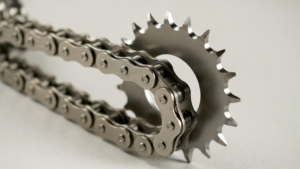
Shark finning: Look closely at the teeth of the posterior dental disc. If the tip of the tooth is tilted to one side and looks like a sharp “shark fin” instead of a symmetrical peak shape, it is a “hook. This is because the chain is no longer smoothly rolling between the teeth, but is dragging hard on the tooth plate.
Half tooth principle: This is the most reliable DIY inspection method. Hold the chain at the 3 o’clock position of the rear tooth plate and pull it back. If it can be pulled to expose more than half of the teeth, it means that the internal tolerance has completely collapsed and it is time to replace the whole transmission set.
Noise, Vibration And Frustration
Grinding iron sound and vibration: If you feel rhythmic vibration on your pedal, or hear a “click” sound at low speed, the high probability is that the dead section will get stuck when passing the front small fly (small tooth plate).
Feeling of frustration: Because of the varying tightness of the worn chain, when you ride with a constant throttle, you will feel as if the car is hesitating or jumping. This is an uneven tension that affects the rear wheel speed.
Why 15,000-20,000 Miles Is A Bump
Although high-quality chains can indeed run this long, the premise is that you have to seriously clean and lubricate every 500 miles. After this mileage, the structural strength of the Grand Festival and the side panels is hard to say.
Chain fracture: The chain breaks under high-speed load, either throwing it out like a whip to shatter your engine shell, or clinging to the rear wheel hub, causing the rear wheel to lock up instantly.
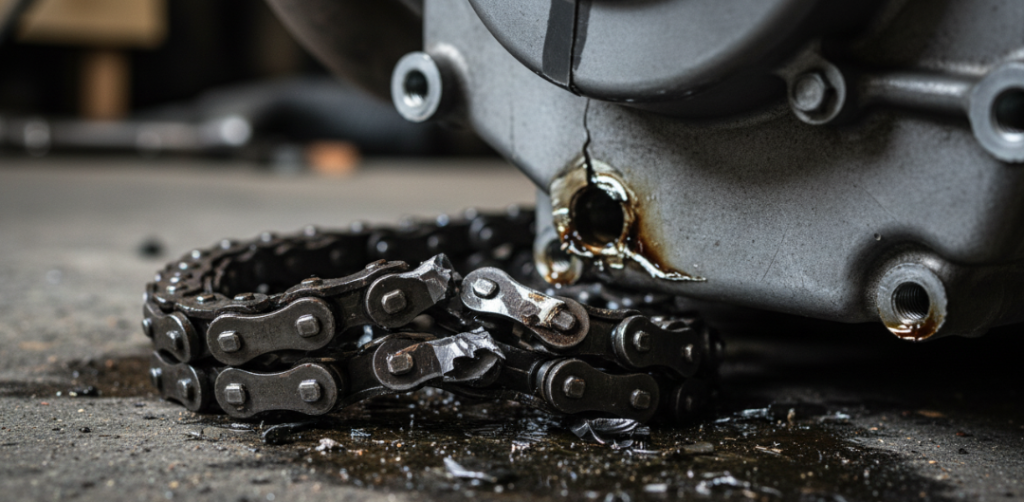
Safety First: The money for changing a set of chain discs is really only a fraction compared with the cost of repairing the engine or hospitalization.
Professional Judgment
If you find any rust, teeth, or adjustment limits, don’t wait for the so-called “20,000 mile mark”. Replace the whole set of chains and denture plates, not only for the smoothness of the car, but also for you to go home safely.
Author: Dave Miller
Having handled thousands of drive chain replacements, I’ve seen firsthand how a little neglect can lead to major safety risks. My mission is to translate complex mechanical issues into practical advice, helping fellow riders stay safe, save on repair costs, and truly understand the machine beneath them.
Related recommendations
-

How Often To Clean Motorcycle Chain?
359Discover How Often To Clean Motorcycle Chain And The Proper Ways For Detailed Cleaning And Effective Chain Lubrication.
View details -
Motorcycle Chain Rust: Removal, Causes, and Prevention
420Prevent Motorcycle Chain Rust. Learn How To Clean, Lube, And Protect Your Chain From Corrosion For Longer Life.
View details -
Type Of Motorcycle Chain Explanation
309Explanation Of The Differences Between Standard, O-Ring, And X-Ring Motorcycle Chains.
View details -
Should I Change My Sprockets With My Chain
166Yes, You Should Replace Sprockets With Your Chain. Learn Why Synchronization Is Vital For Safety And Performance.
View details