
 Motomaxsfr



Produkt suchen
Wann ist die Motorradkette zu ersetzen?
Sie sollten Ihre Motorradkette ersetzen, wenn sie deutliche Anzeichen von Verschleiß aufweist, wie z. B. hakende Kettenradzähne, geknickte Kettenglieder oder übermäßiges Spiel, das sich nicht mehr einstellen lässt. Die meisten O-Ring-Ketten halten zwischen 15.000 und 30.000 Meilen, aber der Austausch sollte sich nach dem physischen Zustand richten und nicht nur nach der Laufleistung.
In diesem Video wird kurz erklärt, wann Kette und Ritzel ausgetauscht werden müssen:
Wichtige Anzeichen dafür, dass es Zeit ist, Ihre Motorradkette zu ersetzen:
Der "Zugtest": Ziehen Sie die Kette in der 3-Uhr-Position vom hinteren Ritzel ab. Wenn Sie mehr als einen halben Zahn oder eine große Lücke sehen können, ist die Kette überdehnt.
Verhakte Zahnräder: Überprüfen Sie die Zähne; wenn sie wie "Haifischflossen" aussehen oder zu einer Seite gebogen sind, anstatt symmetrisch zu sein, sind sie abgenutzt.
Geknickte oder steife Glieder: Wenn die Glieder nach dem Reinigen und Schmieren verbogen (geknickt) bleiben, sind die internen O-Ringe defekt.
Die maximale Einstellung ist erreicht: Wenn sich die Hinterachse am Ende des Einstellbereichs befindet und die Kette noch immer locker ist.
Rost und Lärm: Übermäßige Schleifgeräusche oder starker orangefarbener Rost, der sich nicht durch Reinigung entfernen lässt.
Profi-Tipp: Aus Gründen der Sicherheit und Langlebigkeit sollten Sie die Kette und beide Ritzel (vorne und hinten) immer als kompletten Satz austauschen.
Signal zum Wechseln der Motorradkette
Ich werde die oben genannten Punkte auseinandernehmen und erläutern, damit Sie wissen, wo die wichtigsten Punkte sind, wenn Sie es das nächste Mal selbst tun.
Überprüfung der inneren Spannung durch Zugversuch
Viele Leute denken, dass die Kettenlängung ein längeres Metall ist, aber das ist nicht der Fall. Der Hauptgrund ist, dass die Stifte und Buchsen im Inneren der Kette abgenutzt sind, was zu einem größeren Spalt und einer längeren Teilung der gesamten Kette führt.
So geht's: Suchen Sie die Stelle direkt hinter der hinteren Zahnplatte, klemmen Sie die Kette mit der Hand ein und ziehen Sie sie heraus.
Fazit: Die Kette in gutem Zustand lässt sich kaum ziehen. Wenn Sie eine offensichtliche Lücke aufreißen können, bedeutet dies, dass die Teilung der Kette nicht mehr mit der Zahnplatte übereinstimmt. Zu diesem Zeitpunkt wird die Kraftübertragung extrem instabil und die Zähne können jederzeit springen.
"Haifischflossen"-förmiger Zahnscheibenverschleiß
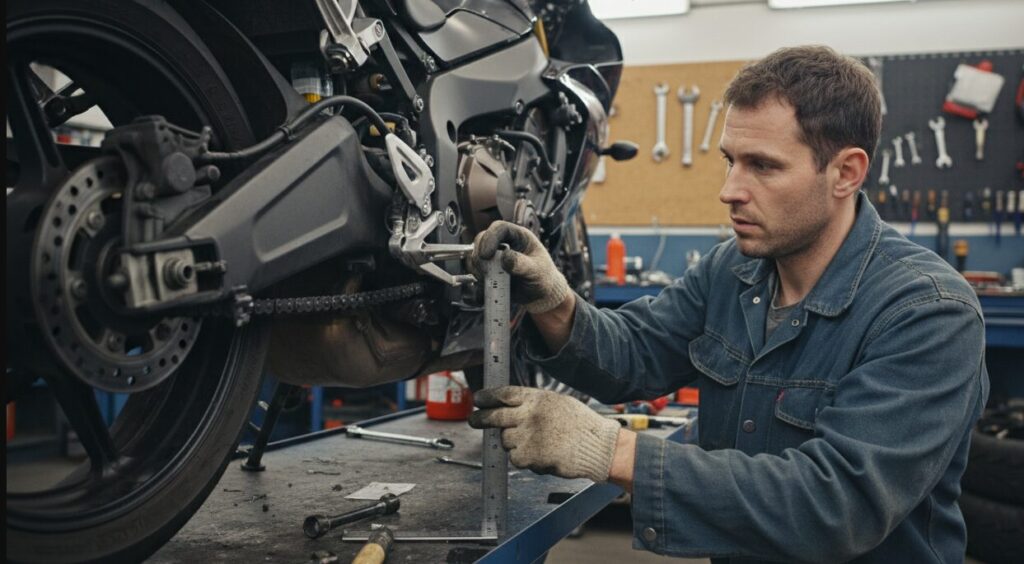
Kette und Zahnscheibe sind ein symbiotisches System, sie "laufen ineinander".
Symmetrisch vs. hakenförmig: Die Spitzen der neuen Zahnscheiben sind glatt und symmetrisch. Nach starker Abnutzung werden die Zähne scharf und biegen sich in Fahrtrichtung.
Seitliche Abnutzung: Wenn Sie feststellen, dass die Seite des Zahns abgenutzt ist, bedeutet dies in der Regel, dass Ihre Felge nicht richtig ist, oder es gibt ein Problem mit der Schwingenwelle. Ignorieren Sie diese "Haifischflosse" nicht, sie kann die Kette nicht greifen, was leicht zum Abspringen der Kette führt.
Geknickte Links
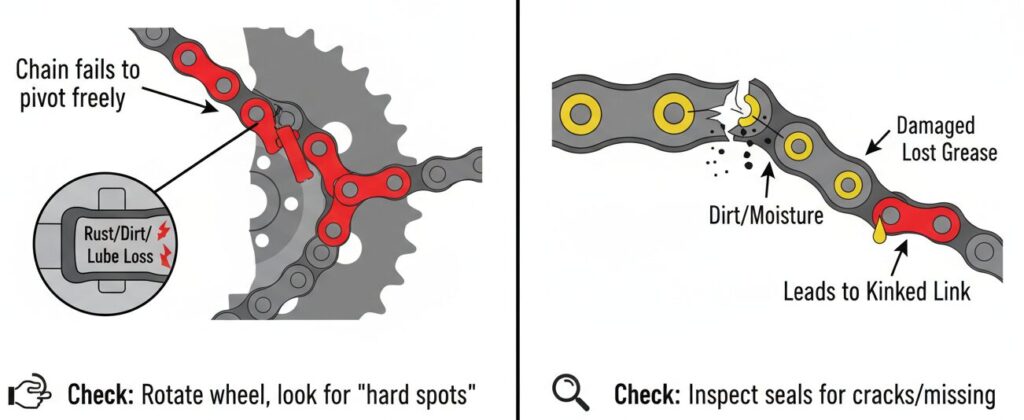
Moderne Ketten sind auf O-Ringe oder X-Ringe angewiesen, um das Fett im Inneren der Rollen abzudichten. Sobald der Dichtungsring gebrochen ist, tritt das Öl im Inneren aus, die Erde draußen tritt ein, und das Innere der Kette beginnt trocken zu schleifen.
Die Symptome: Wenn Sie sehen, dass die Kette beim Drehen des Hinterrads in einigen Positionen nicht immer gerade ist, wie eine tote Kurve, handelt es sich um ein totes Gelenk.
Gegenmaßnahmen: Erwarten Sie nicht, dass Sie sich auf mehr Sprühschmieröl verlassen können, um sich zu retten. Dieser innere Schaden ist irreversibel, und die strukturelle Stärke der Kette ist stark reduziert.
Serie 520VX2 Kette
Fahrradszenarien: Straße, Autobahn, Motorradtouren, Stadtfahrten.
Die Grenzen der Regulierung erreichen
Die Hinterradschwinge jedes Fahrzeugs verfügt über eine Einstellrille, um die natürliche Dehnung der Kette während des Gebrauchs auszugleichen.
Ende: Wenn sich die Hinterachse bis zum Ende der Einstellrille zurückgezogen hat und der Kettendurchhang immer noch mehr als 30-40 mm beträgt (Einzelheiten siehe Anleitung), bedeutet dies, dass sie "abgestorben" ist.
Warnung: Niemals eine alte Kette gewaltsam "kürzen", indem man ein oder zwei Glieder entfernt. Ich habe Leute gesehen, die das getan haben, und es ist extrem gefährlich, weil die Metallermüdung der Kette zu diesem Zeitpunkt bereits sehr ernst ist.
Kann den Lärm und den Rost nicht ignorieren
Eine gesunde Kette sollte mit einem rhythmischen "Summen" laufen.
Abnormales Geräusch bei Abnutzung: Wenn genügend Öl vorhanden ist oder das "Klick"-Geräusch beim Aufprall von Metall zu hören ist, ist die Rolle normalerweise gebrochen oder zu stark abgenutzt.
Orangefarbene Oxidation: Eine Schicht Flugrost auf der Oberfläche ist in Ordnung, wischen Sie sie einfach ab. Aber wenn es die Art von tiefen Metallschicht, begleitet von Lochfraß dicken Rost, was darauf hindeutet, dass die Kette wurde spröde, jederzeit besteht die Gefahr des Zusammenbruchs.
Ersetzen Sie die Kette und die Ritzel als Satz
Unabhängig davon, ob Sie bei Ihrer Inspektion eine gedehnte Kette, verschlissene Ritzel oder beides feststellen, müssen Sie das vordere Ritzel, das hintere Ritzel und die Kette immer zusammen als kompletten Satz ersetzen.
Der Grund dafür ist einfach: Der Antriebsstrang ist ein System ineinandergreifender Teile, die sich gemeinsam abnutzen. Eine neue Kette wird schnell ruiniert, wenn sie auf alten, abgenutzten Ritzeln läuft. Umgekehrt nutzt eine alte, gedehnte Kette neue Ritzel schnell ab. Der Austausch nur eines Teils des Systems ist eine falsche Sparsamkeit, die die Lebensdauer der neuen Komponente erheblich verkürzt und zu einer schlechten Leistung führt. Noch wichtiger ist jedoch, dass ein unpassendes Set die reibungslose und zuverlässige Kraftübertragung beeinträchtigt und ein unnötiges Sicherheitsrisiko darstellt.
Autor :George
Ich bin ein lebenslanger Motorradenthusiast und praktischer Mechaniker mit über 18 Jahren Erfahrung in der Wartung von Hochleistungsmotorrädern. Meine Leidenschaft ist es, Motorradfahrern zu helfen, die technischen Feinheiten ihrer Maschinen zu verstehen, um sowohl Spitzenleistung als auch Verkehrssicherheit zu gewährleisten. Nach Tausenden von Kilometern in unterschiedlichem Terrain weiß ich aus erster Hand, wie wichtig ein gut gewarteter Antriebsstrang ist. Ich vermittle praktische Wartungstipps, bei denen die Sicherheit an erster Stelle steht, damit Sie weniger Zeit in der Werkstatt verbringen und mehr Zeit haben, die Fahrt zu genießen.