Motomaxsfr


Search Product
How To Maintain Your Motorcycle Chain
The core is three points: frequent cleaning, quasi-lubrication and strict control of tightness. The most standard cycle is to operate every 300 to 500 miles. If you have just finished riding on a rainy day, you must deal with it immediately when you come back, otherwise the muddy water will soon make your chain rusty.
Preparation: Safety First
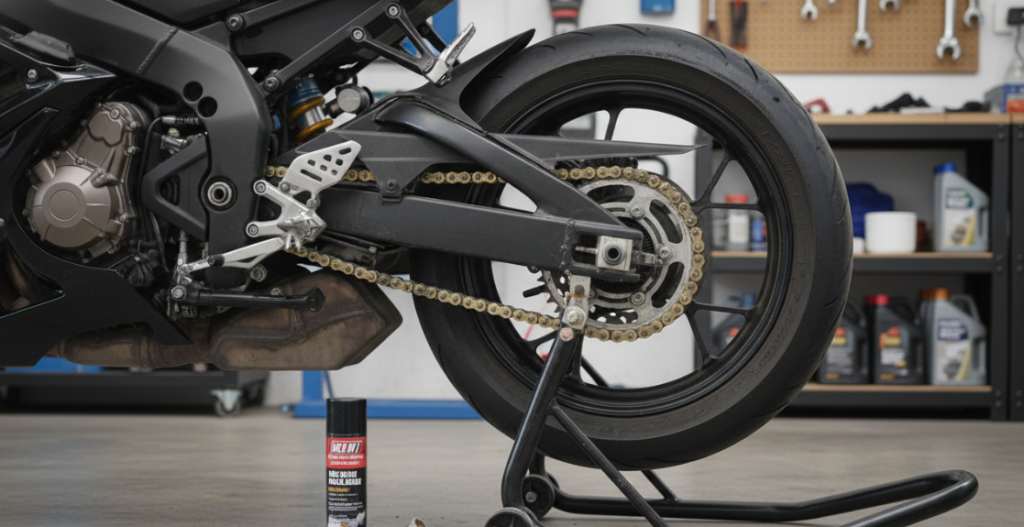
Before starting work, make sure that the engine is off and in neutral. In order to save trouble, some novices like to hang the gear and let the engine drive the rear wheel. Once the chain or sprocket is twisted, the consequences will be unimaginable. In order to work efficiently, be sure to use the rear support frame to support the rear wheels. Making the wheels rotate freely is a prerequisite for subsequent cleaning and oiling.
Cleaning: Reject “Wear Paste”
Don’t add oil directly to the old grease, which is equivalent to coating the chain with a layer of “wear paste”. First, use a special chain cleaning agent or degreasing agent to spray it, and cooperate with a stiff brush to thoroughly clean the sludge on the rollers and side plates. A fatal point must be emphasized here: the use of wire brushes is absolutely prohibited. Modern chains have rubber seals (O-ring or X-ring) at the seams, which are designed to lock the internal butter. Once they are cut by hard metal bristles, the chain is basically scrapped. After washing, dry with a clean microfiber cloth, be sure to wipe completely dry.
Lubrication: The Right Remedy
It is also useless to choose lubricating oil if it is not good. It is recommended to choose according to your riding environment. Use wet chain oil when it is wet and rainy, and replace dry lubricant when it is dry and dusty. While turning the rear wheel, spray oil on the inner roller. I usually recommend spraying on the inside, because centrifugal force will throw oil into the inside of the assembly when riding, instead of throwing it all over the rim.
Tightness And Alignment
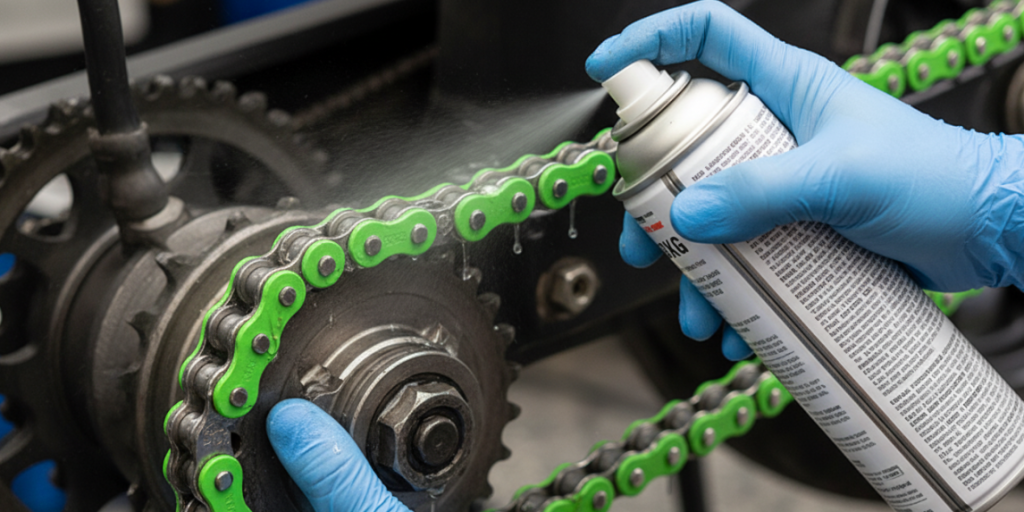
Chain tightness (I. e. vertical runout) must be strictly referred to your instructions. Too loose easy to off the chain, too tight will break the chain and even damage the gearbox output shaft, this is not a trivial matter. If you find that the tightness is wrong, you must stare at the calibration scale on the rear fork when adjusting the position of the rear wheel. The key is to keep the rear wheel absolutely in a straight line, otherwise the chain and sprocket will have abnormal wear on one side. According to this process, although it is troublesome, these efforts cannot be saved for the sake of riding safety and vehicle life.
Author: Jack Miller
Hi, I’m a lifelong motorcycle enthusiast and seasoned mechanic with over 10 years of experience on the road. I believe that understanding the mechanics of your machine is the key to both safety and performance. Through my hands-on experience in the garage, I’ve learned that the secret to a smooth ride isn’t complex theory, but consistent, proper maintenance.
Related recommendations
-

525 Motorcycle Chain: Size, Strength, Master Link & Kit Guide
597Compare 520 vs 525 chain dimensions, strength, and durability. Find the best 525 motorcycle chain and sprocket kit.
View details -
How To Check Motorcycle Chain Wear
261Use The Simple Pull Test To Check Motorcycle Chain Wear. If You Expose Half A Tooth At The Rear Sprocket, Replace It.
View details -
Do You Need A Chain Guard On A Motorcycle
199Do You Need A Chain Guard? No, But You Risk Grease Fling, Injury, And Fines. See Why A Custom Guard Is The Safer Choice.
View details -
Belt Drive Vs Chain Drive Efficiency Motorcycle
12Compare Belt Vs Chain Drive Efficiency. Why Chains Offer 99% Power Transfer While Belts Lose Up To 15% Of Your Horsepower.
View details